Sask Polytech students take on real-world challenges as Saskatchewan’s newest applied research innovators
Saskatchewan Polytechnic students put their ideas to the test, with more than 80 applied research projects on display at this year’s Applied Research Student Showcase.
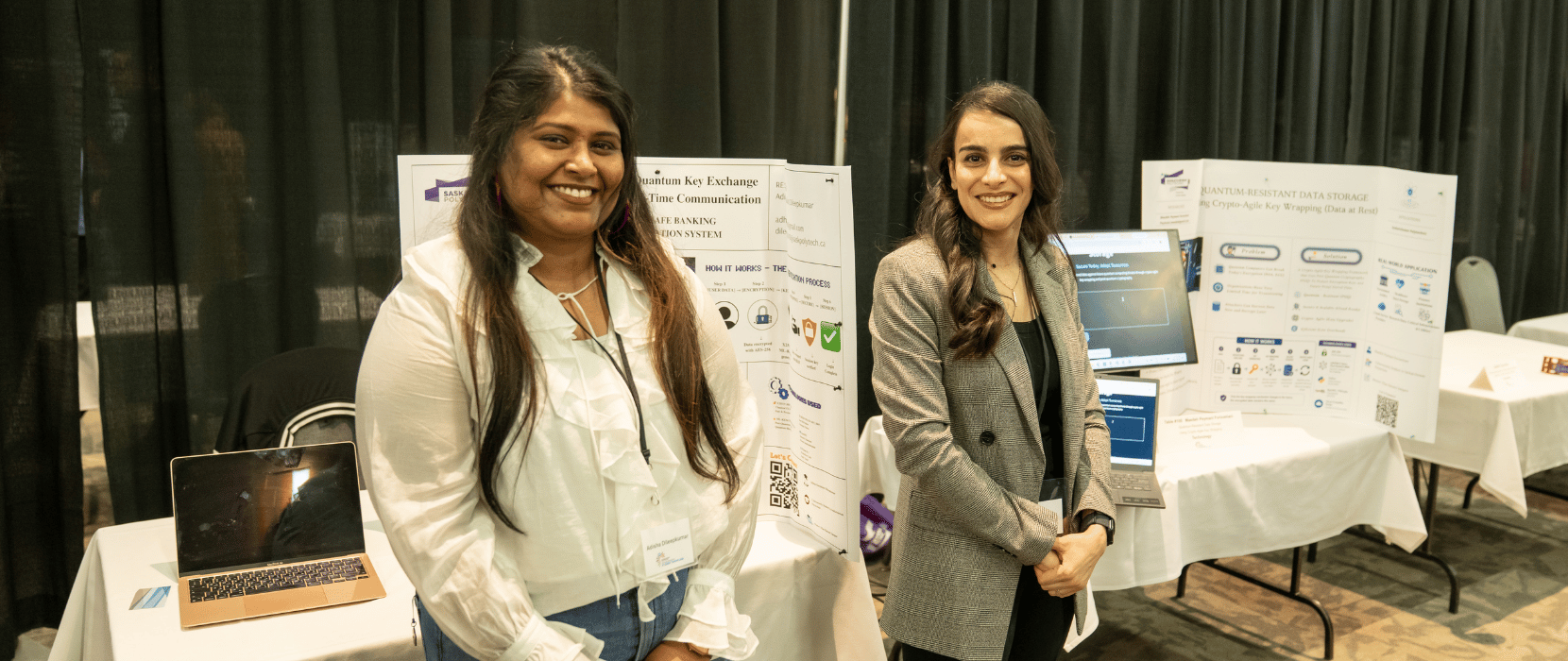
A total of 110 students took part, tackling real‑world challenges with practical, innovative solutions that highlight the growing impact of student‑led research.
Projects covered a wide range of fields, from artificial intelligence, robotics, cybersecurity and advanced manufacturing to health, education, Indigenous knowledge and environmental sustainability. Each one developed alongside industry and community partners to address real needs.
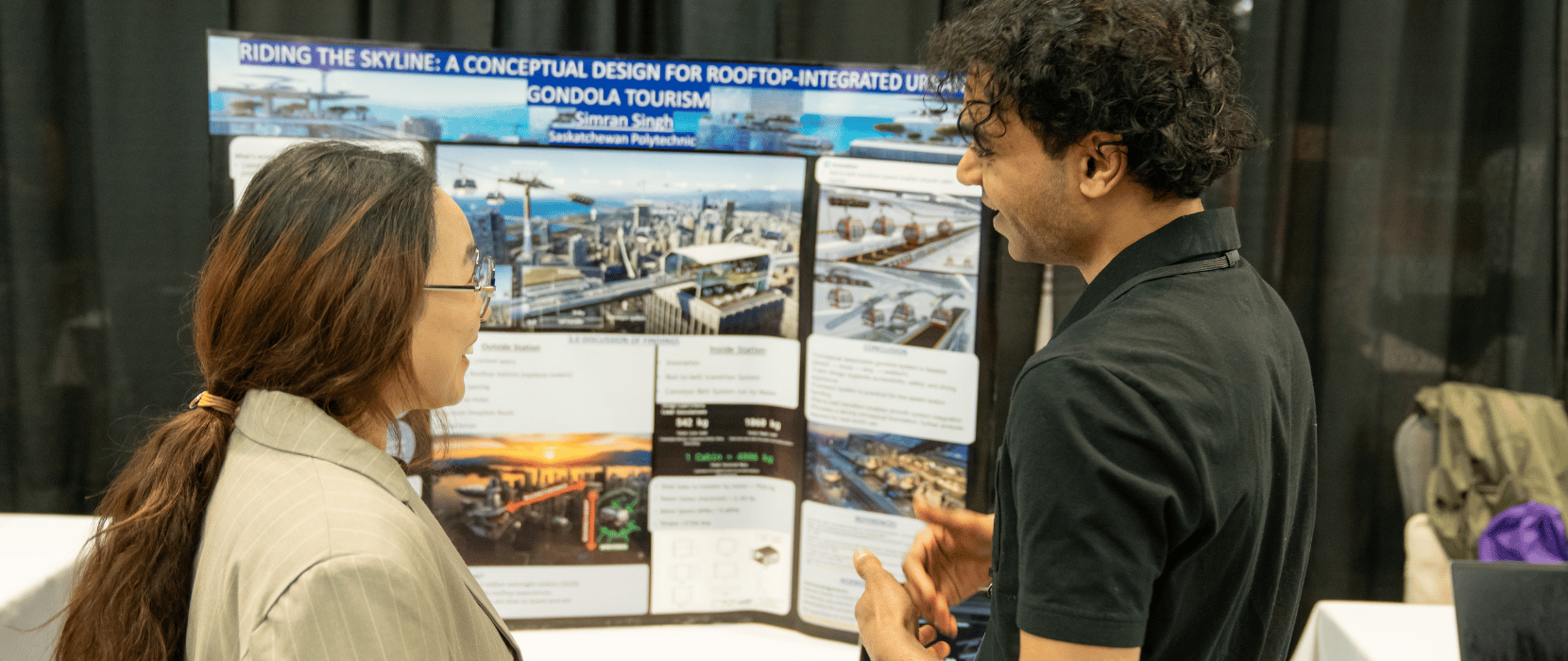
“It’s inspiring to see the innovative applied research and capstone projects our students have created,” says Dr. Larry Rosia, Sask Polytech president and CEO. “Industry partners turn to Sask Polytech for its applied expertise. The projects at this year’s showcase demonstrate practical solutions, giving students valuable real-world experience and a head start as they enter the workforce.”
“The enthusiasm and commitment students bring to their applied research projects is exciting,” says Dr. Ian McWilliams, associate vice-president, Applied Research and Continuing Education. “It’s a strong reminder of the impact applied research can have in our communities and beyond. Congratulations to each of the students in this year’s showcase.”
Midway through the day, attendees heard from 23-year old Kyle Sava, manager and lead architect at IBM Canada who shared insights on how generative AI and large language models are shaping the future of work. Drawing on his experience building IBM’s watsonx Workshop and teaching technical subjects internationally, Sava emphasized making AI accessible and encouraged students to build confidence alongside technical skills.
Sask Polytech presented 10 awards totalling $7,400 to showcase winners. Many students also received a scholarship valued up to $1,000 to support their research projects during the academic year, while others presented capstone projects or unique research conducted through Sask Polytech’s research centres.
2026 Applied Research Student Showcase Winners
Health and social
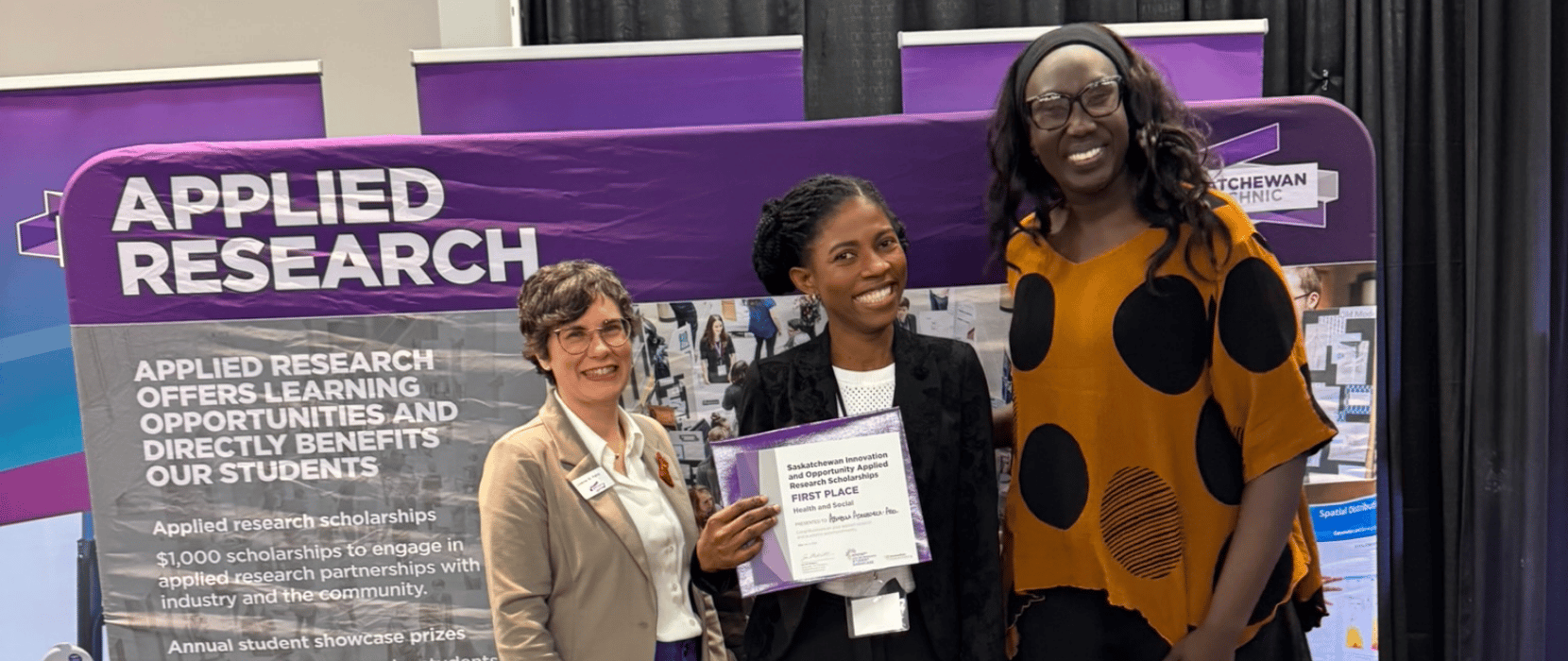 First ($1,000)
 - Abimbola Adegboyega-Abel
- Project: An evidence-based review of leadership micro-credential models and organizational needs in the Moose Jaw Police Service
- Program: Leslie and Irene Dube School of Nursing/SCBScN Nursing
- Description: This project reviews existing micro-credential models and compares them with the needs of Moose Jaw Police Service. The goal is to provide recommendations on relevant leadership development planning that aligns with organizational needs and future workforce development.
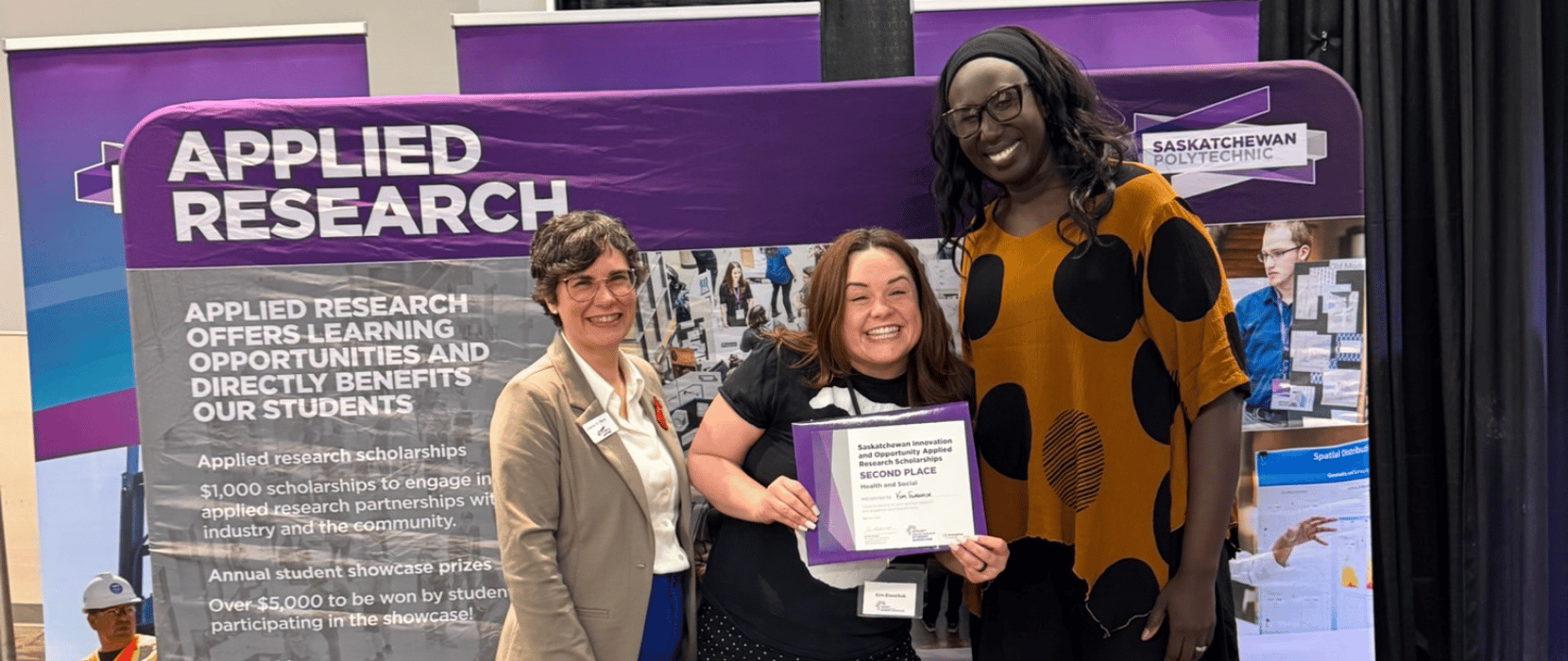 Second ($800)
 - Kim Elaschuk
- Project: PERIOD. Degendering menstrual products
- Program: School of Creative Media, Arts and Sciences/Graphic Communications
- Description: Today, not everyone who menstruates identify as feminine. Even if they do, femininity, much like tampons, is not one size fits all. This project seeks to de-gender menstruation products, reduce period stigma and leave outdated stereotypes behind.
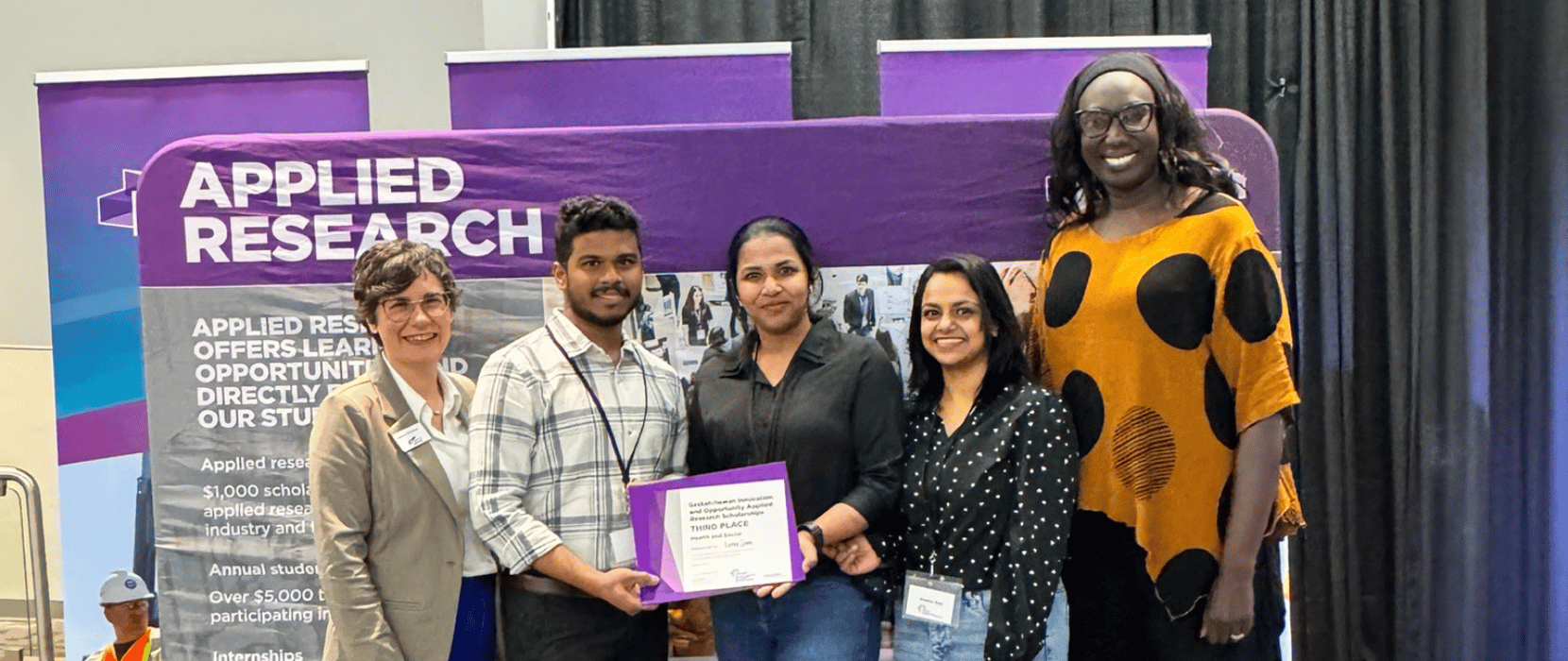 Third ($500)
 - Gopika Ajay, Neethu Kaippetty Sathyavan, Shylash Subramania Pillai
- Project: Little steps
- Program: School of Computing and Digital Innovation/Technology Management
- Description: Little Steps is a structured digital support platform developed to improve access to reliable maternal and childcare resources. The project addresses the fragmentation of localized support services by centralizing essential information and tools within one accessible and organized system.
Sustainability and environment
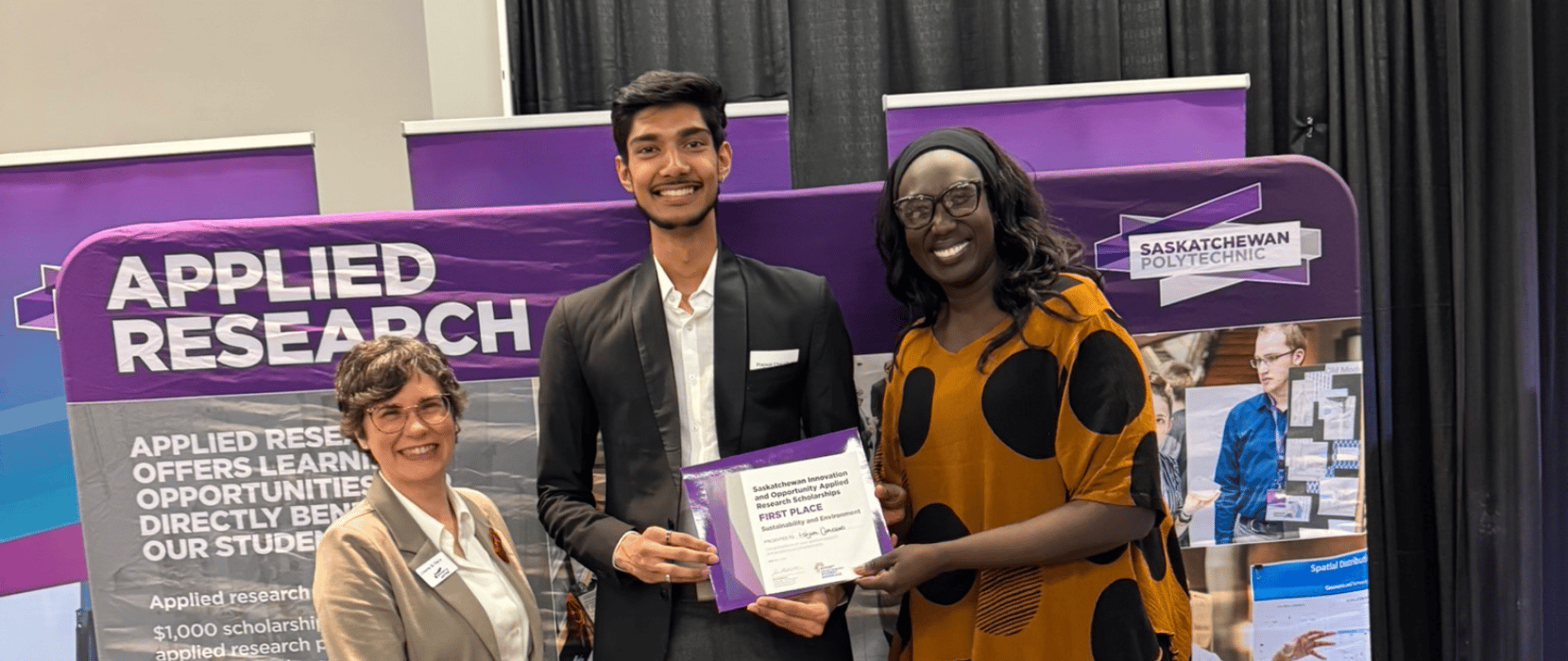 First ($1,000)
 - Prajwal Chaudhari
- Project: Wetland loss in an agricultural landscape: A 25-year study of Smith Creek Watershed
- Program: School of Agriculture, Natural Resources and Sustainability/Environmental Engineering Technology
- Description: This study quantifies wetland loss within the Smith Creek watershed over 25 years using satellite imagery and GIS-based delineation. The study identifies links between agricultural land use and wetland reduction, highlighting impacts on watershed hydrology and migratory waterfowl habitat.
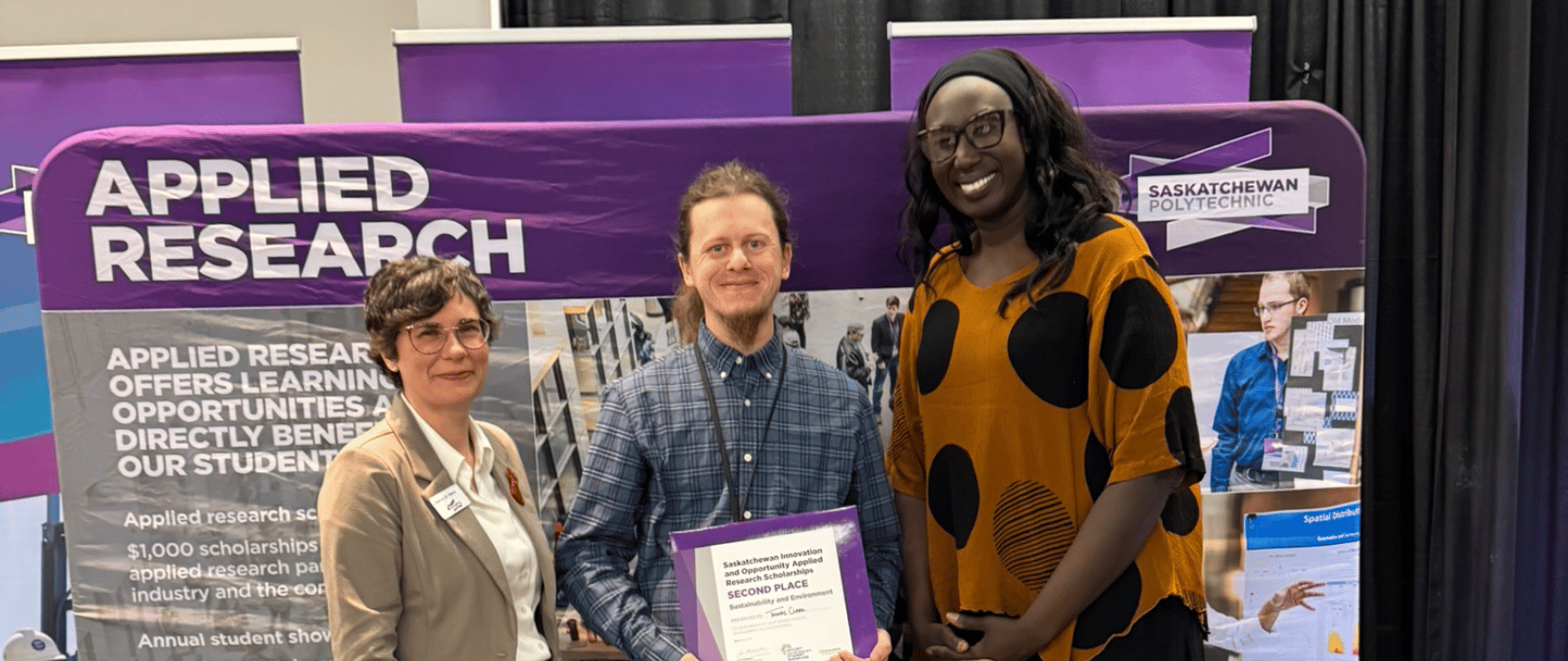 Second ($800)
 - Thomas Clark
- Beaver Dams and Northern Leopard Frog overwintering at Wanuskewin
- Program: School of Agriculture, Natural Resources and Sustainability/Environmental Engineering Technology
- Description: This project investigates how beaver dams influence overwintering habitat for Northern Leopard Frogs at Wanuskewin Heritage Park. It combines a review of scientific literature with field observations and geospatial analysis, including drone imagery and digital elevation models to evaluate habitat conditions.
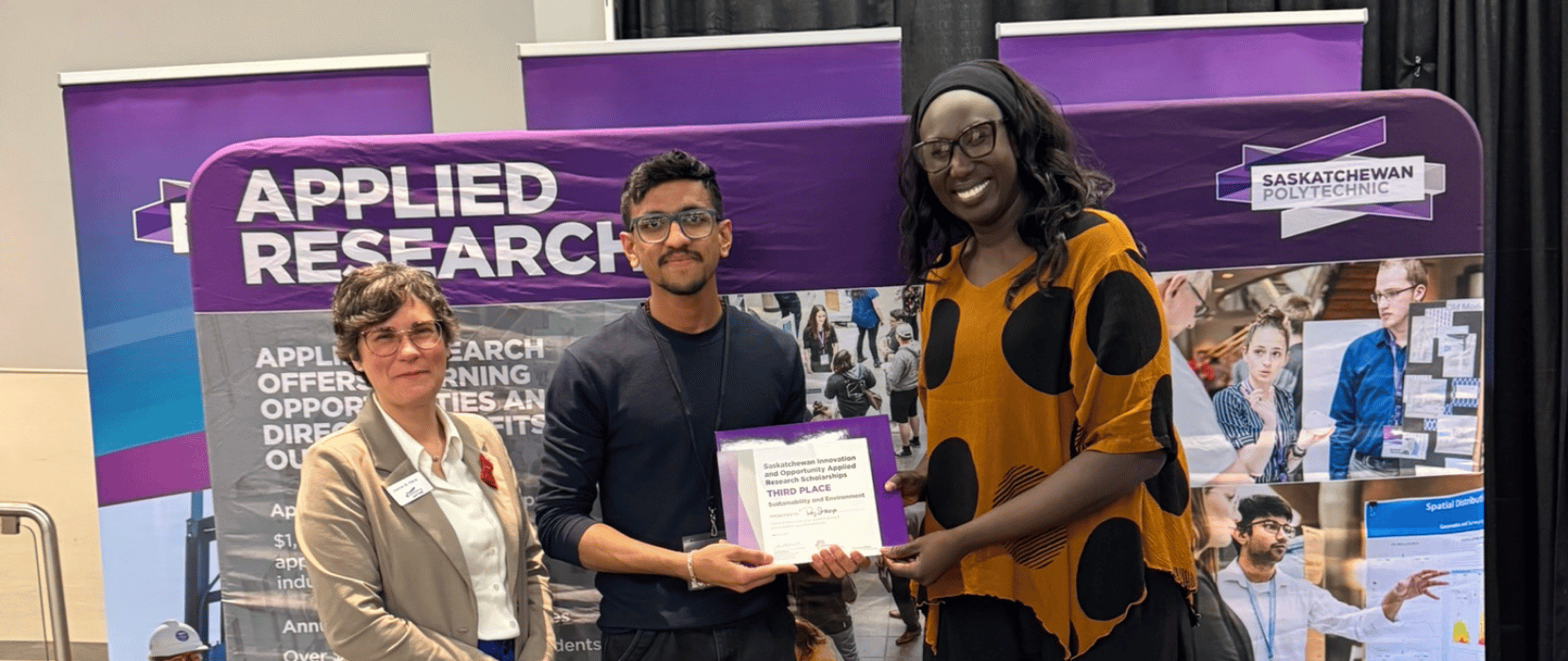 Third ($500)
 - Raj Satasiya
- Method validation for 1,4-Dioxane in water using Headspace Gas Chromatography Mass Spectroscopy.
- Program: School of Agriculture, Natural Resources and Sustainability/Chemical Technology
- Description: This project validates a developed method for 1,4-Dioxane in water. 1,4-Dioxane is a volatile organic compound and is a carcinogen to humans. 1,4-Dioxane can be found in industrial water, wastewater, by-product of cosmetics and laundry detergents.
Technology
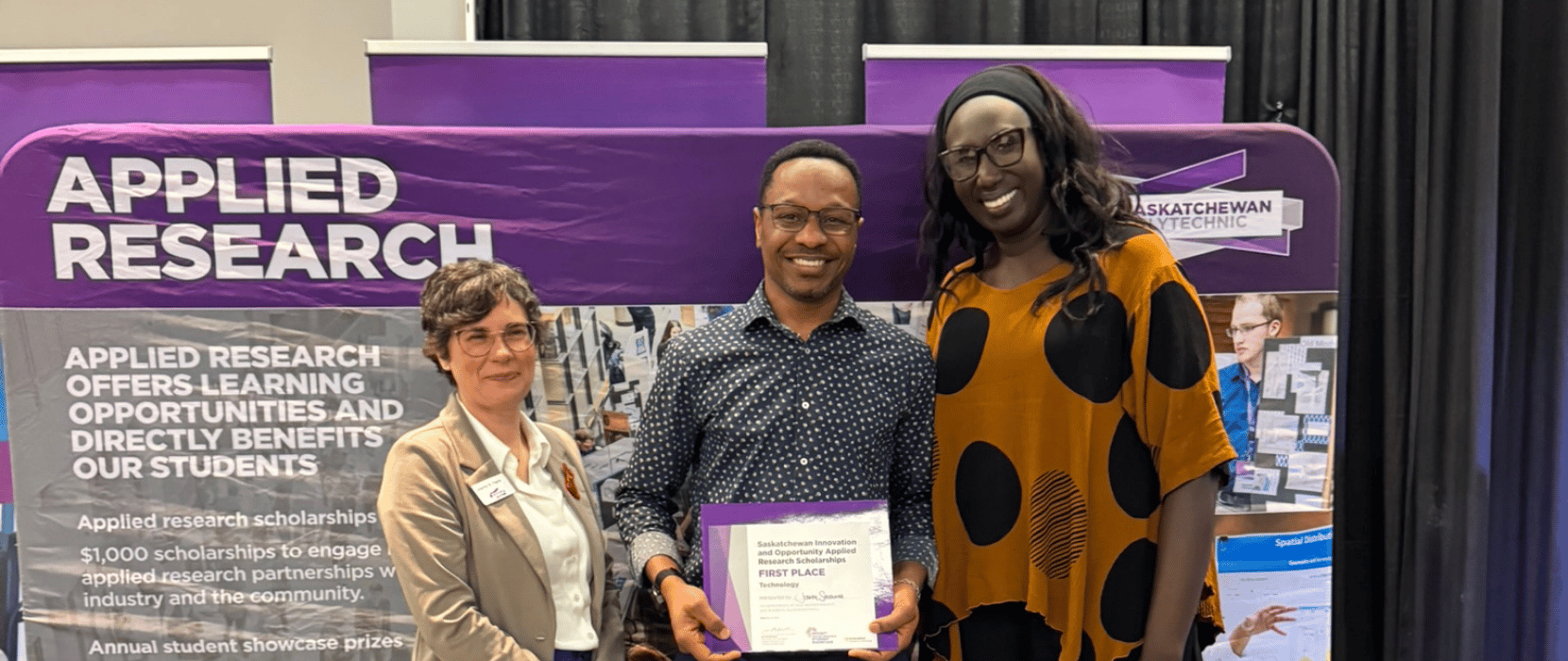 First ($1,000)
 - Joseph Shodunke
- Project: SPSDS
- Program: School of Computing and Digital Innovation/Computer Automated Systems Technician
- Description: SPSDS is a smart parking system using micro controllers and sensors to detect parking occupancy in real time. Housed in rugged 3D-printed enclosure, nodes stream live data to a cloud dashboard accessible via a mobile phone app or webpage for seamless infrastructure management. It’s a reliable, weather-proof solution built to modernize cities and end parking frustration.
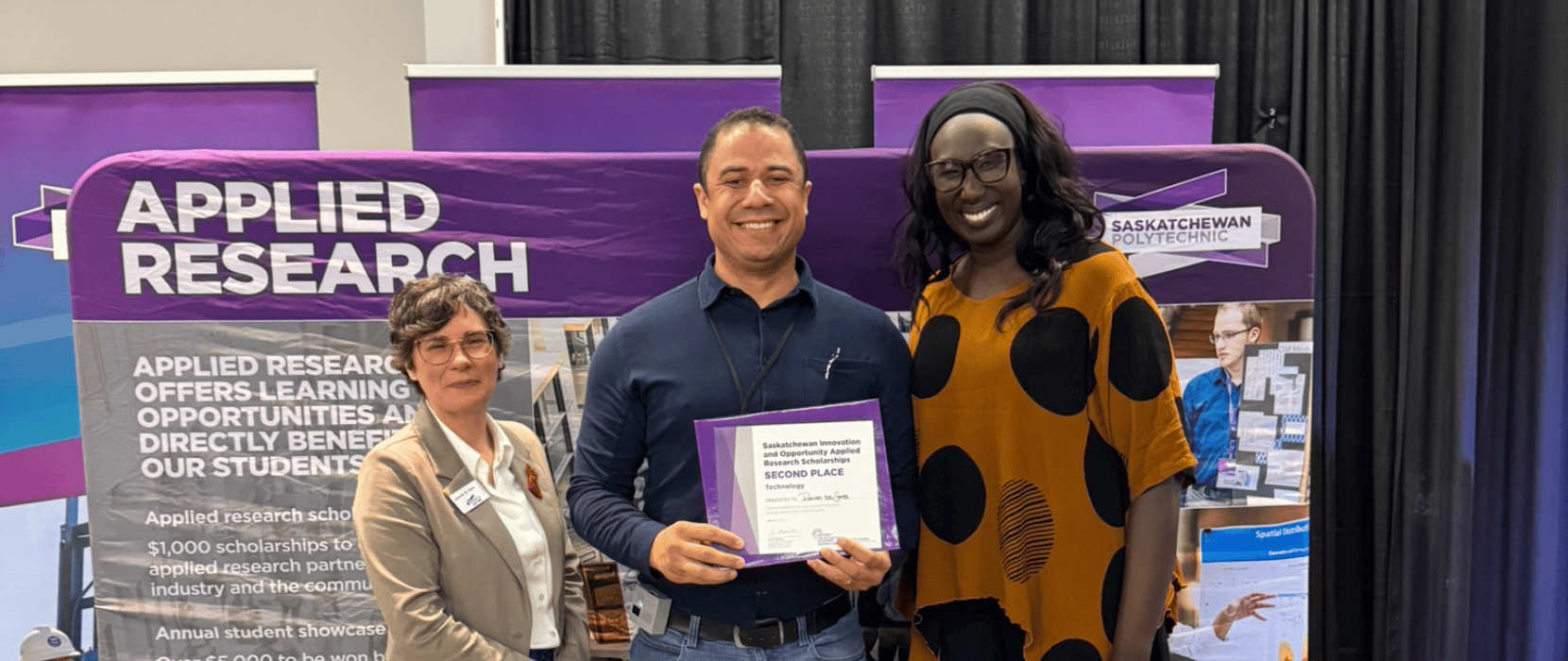 Second ($800)
 - Ranieri dos Santos
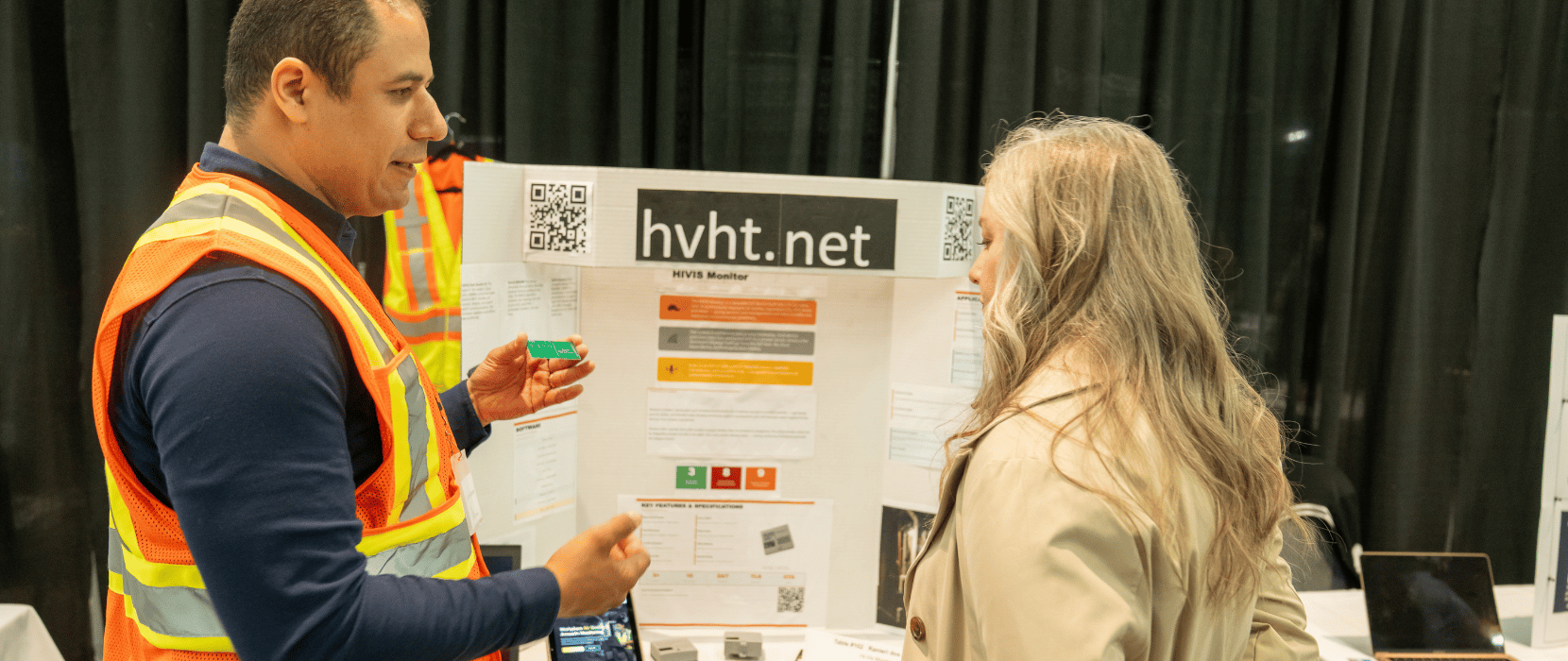
- Project: Hi-Vis Monitor
- Program: School of Computing and Digital Innovation/Computer Automated Systems Technician
- Description: HIVIS Monitor is a compact Internet of Things device that can be worn on a belt or inside a hi-vis safety vest. It continuously measures indoor air quality and noise levels in real time — tracking CO₂, VOCs, temperature, humidity, and sound — and sends data securely to a cloud dashboard, making invisible environmental risks visible.
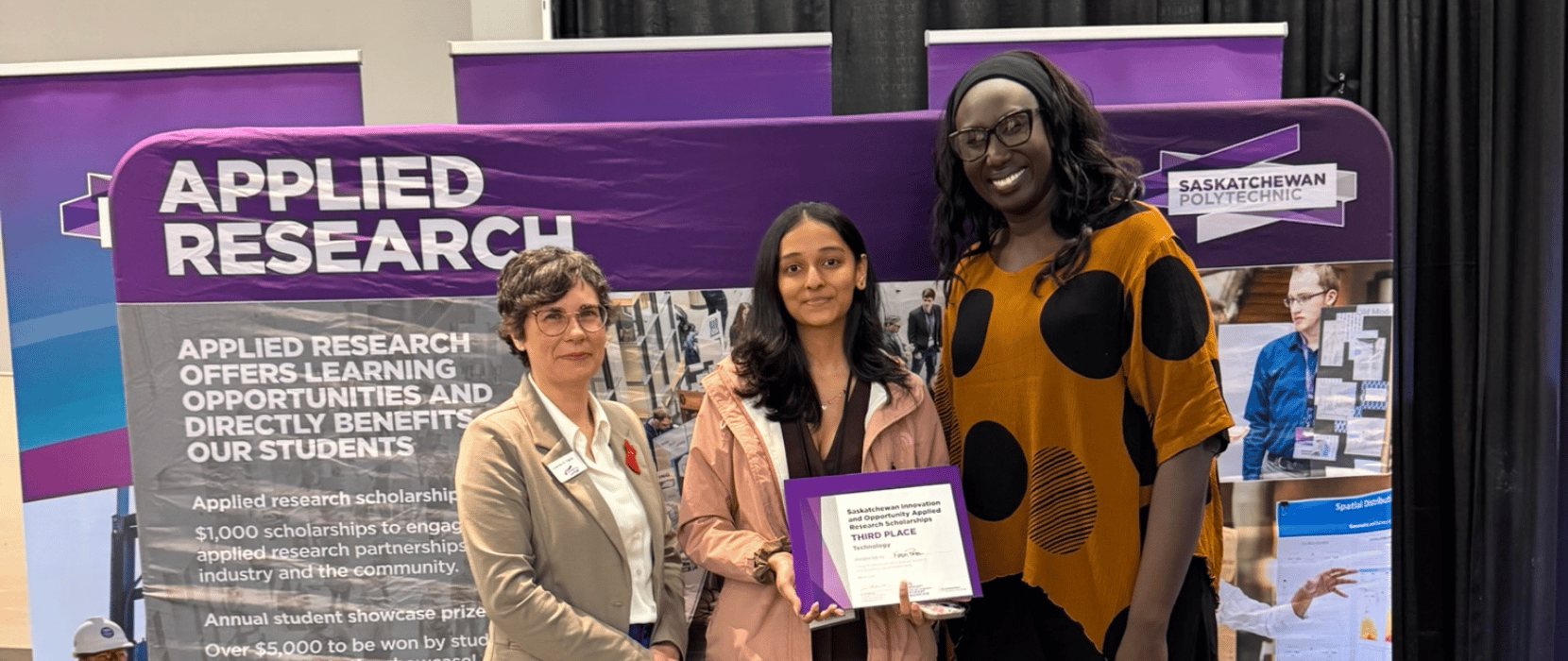 Third ($500)
 - Krishi Patel
- Project: Callisphere - An ultimate winter defence
- Program: School of Creative Media, Arts and Sciences/Graphic Communications
- Description: Callisphere is a smart windshield film designed to prevent ice buildup using integrated heating and hydrophobic technology. It eliminates the need for manual scraping and improves winter driving safety.
People's choice
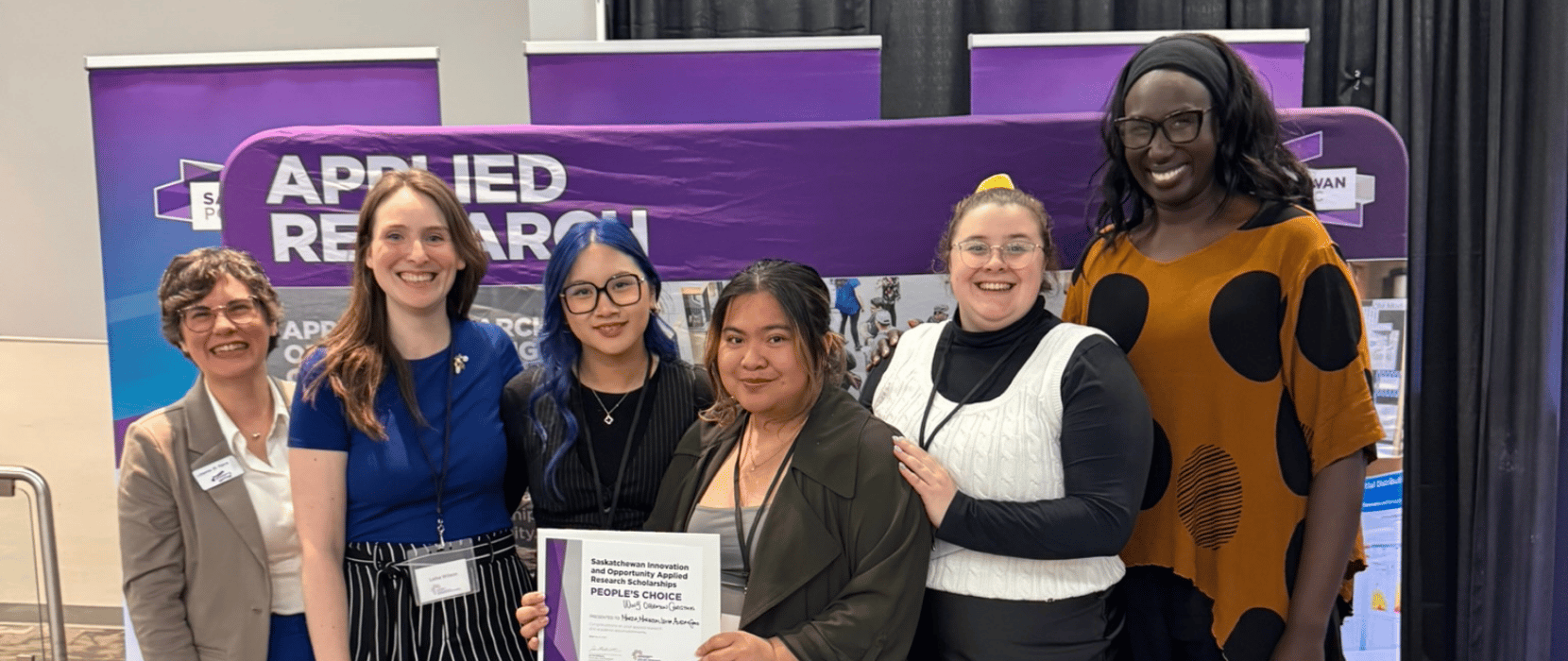 People’s choice ($500)
 - Marzia Giommi, Mariecon Castillo, Leiha Wilson, Alyssa Laggui, Grace Naylor
- Project: Win 5 Operation Christmas
- Program: School of Business and Entrepreneurship/Business
- Description: Students hosted a fundraiser for Saskatoon Interval House at the Roxy Theatre over the holidays and raised nearly $400 and collected 25 pajama sets for families in need while bringing the community together.
High school students from Bedford Road Collegiate also attended the showcase. Seeing applied research in action, these students received insight into post-secondary learning options at Sask Polytech.
The showcase is supported by presenting sponsor Graham Group Ltd., with awards sponsored by Innovation Saskatchewan. SaskWheat provided meals, while Associated Engineering, Crestline and Labs4 supported the event as partners.
Sponsors
Presenting sponsor

Awards sponsor

Meal sponsor

Supporting sponsor



Sask Polytech’s award‑winning applied research program turns ideas into action. Faculty, researchers and students work with public- and private‑sector partners on projects ranging from product development and process design to technology adoption and proof‑of‑concept testing. Intellectual property remains with industry partners, encouraging innovation and long‑term collaboration.
Sask Polytech is always looking to create more work-integrated learning opportunities for our student researchers. If you have a business challenge you need assistance with, please contact us.
Learn more at saskpolytech.ca/research.
Saskatchewan Polytechnic is signatory to the SDG Accord. Sustainable Development Goal alignment is one of the ways Sask Polytech is leading
the rise of polytechnic education.