Expertise shared to next generation of female professionals in STEM
International Women’s Day recognizes the remarkable impact women have in the world. This year’s theme, give to gain, highlights how giving time, knowledge and support help the world move forward. Saskatchewan Polytechnic is proud to recognize some of the women working in STEM who lead, mentor and inspire within our polytechnic community.
Angela Chevrefils joined Sask Polytech 15 years ago as an instructor in the Power Engineering Technology program. An alumna, she enrolled in the program after encouragement from an employer. As someone who didn’t have a lot of information before starting her learning journey, she understands the importance of breaking down information for new students.
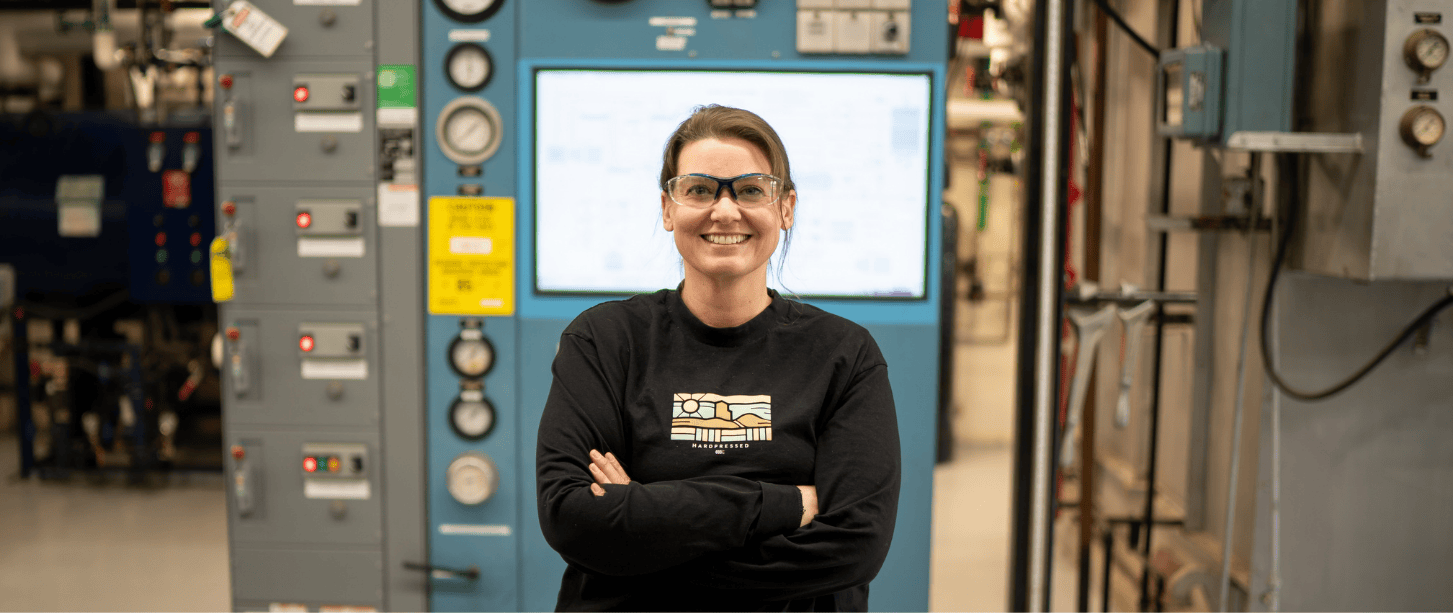
“Power engineers are operators. We work in a lot of different industries that rely on steam, so we could be working in a power plant, a hospital, a brewery or a refrigeration plant,” she says. Power engineers typically work in industries that run 24-7, so shift work is common.
In the industry, employees need critical thinking and problem-solving abilities. Chevrefils knows this first-hand as she worked in power engineering for a decade before becoming an instructor. She enjoys guiding students as they develop these skillsets.
“Watching students reach that moment of understanding is incredibly rewarding,” she says. “I guide them through hands-on lab work and lectures, and it’s exciting to see them apply what they learn to real situations in the field.”
Suzanne Mund was drawn to a STEM career from an early age. She explored several programs before taking a break from university to reassess her career path. During that period, she volunteered at a veterinary clinic. Through that experience, she realized she had an interest in a career in veterinary health care.

Through her career at Sask Polytech, Mund now has the opportunity to offer the same mentorship she once received. She started at Sask Polytech in 2022 as an instructor in the Veterinary Technology program before transitioning to the role of program head.
As a large animal expert specializing in surgery, her knowledge and experience were important tools in rewriting material for the course syllabus.
“In Saskatchewan, we have a dire need for vet techs in rural areas and also those who work with large animals,” she says. “My goal with the large animal course was to introduce students to the food production side of things and also get them excited about working with large animals.”
Mund grew up on a farm with cattle and horses. Her experience gave her an understanding of the industry before she specialized in large animal veterinary medicine.
“There's great encouragement and support for female veterinary health care providers to work in both large and small animal specializations,” she says.
“I’m eager to guide the next generation of veterinary technicians.”
Kaya Forest has also been a faculty member at Sask Polytech for 15 years. She was began working in post-secondary as an Environmental Technology instructor. A few years later, she became the program head.

With a diploma in water quality technology, a bachelor's degree in chemistry and a master's degree in chemistry, Forest has always had a passion for learning. While she focused on chemistry, she dove into varied courses such as archaeology, English, earth sciences and geography.
“I was always looking for new challenges. I really felt like I had an uncommon background, chemist by training, but a lot of applied pieces that go along with it,” she says.
“As an instructor, what drew me to the Environmental Technology program was that it made use of the varied background I had. It was applied chemistry, environmental science and ecology. It brought together all the elements I had spent years developing my passion for. Teaching was a natural progression in my career.”
From working in an office to conducting work in the field, environmental technologists work in pollution monitoring, environmental audits, environmental management, site assessment and remediation, project management and waste management. The vast career opportunities are a draw for students.
“I have a passion for environmental science and saw a unique opportunity to help develop the program,” she says. “To be able to help guide that process was really important.”
“There’s a curiosity that brings students to the program. They want to help the environment. The program uses a structured, scientific way to tap into that interest and is a thread for their studies.”
The Power Engineering Technology, Veterinary Technology and Environmental Technology programs offer graduates the opportunity to start their STEM careers post-diploma or to ladder into partner university programs to complete degrees in two years. Learn more about transfer credits.
Saskatchewan Polytechnic is signatory to the SDG Accord. Sustainable Development Goal alignment is one of the ways Sask Polytech is leading the rise of polytechnic education.