Delegation visit focuses on education-led employment pathways, entrepreneurship and mental health supports
When Kateryna Pryimak talks about civilian life after military service, she speaks from experience.
A Ukrainian war veteran and co-founder of the Ukrainian Women Veterans Movement, Pryimak knows that returning home from military service is rarely straightforward, especially for women.
“A big part of our work is empowerment through education and helping women build a professional path after they serve in the war,” she says. “Women veterans face very different barriers than men, and those realities have to be acknowledged.”
Those barriers are complex and often overlapping. Pryimak points to caregiving responsibilities, household expectations, and sexism and discrimination in hiring practices.
“If you are a young mother, it’s already difficult to find a job,” she says. “If you are a young mother and a veteran, it becomes even more challenging.”
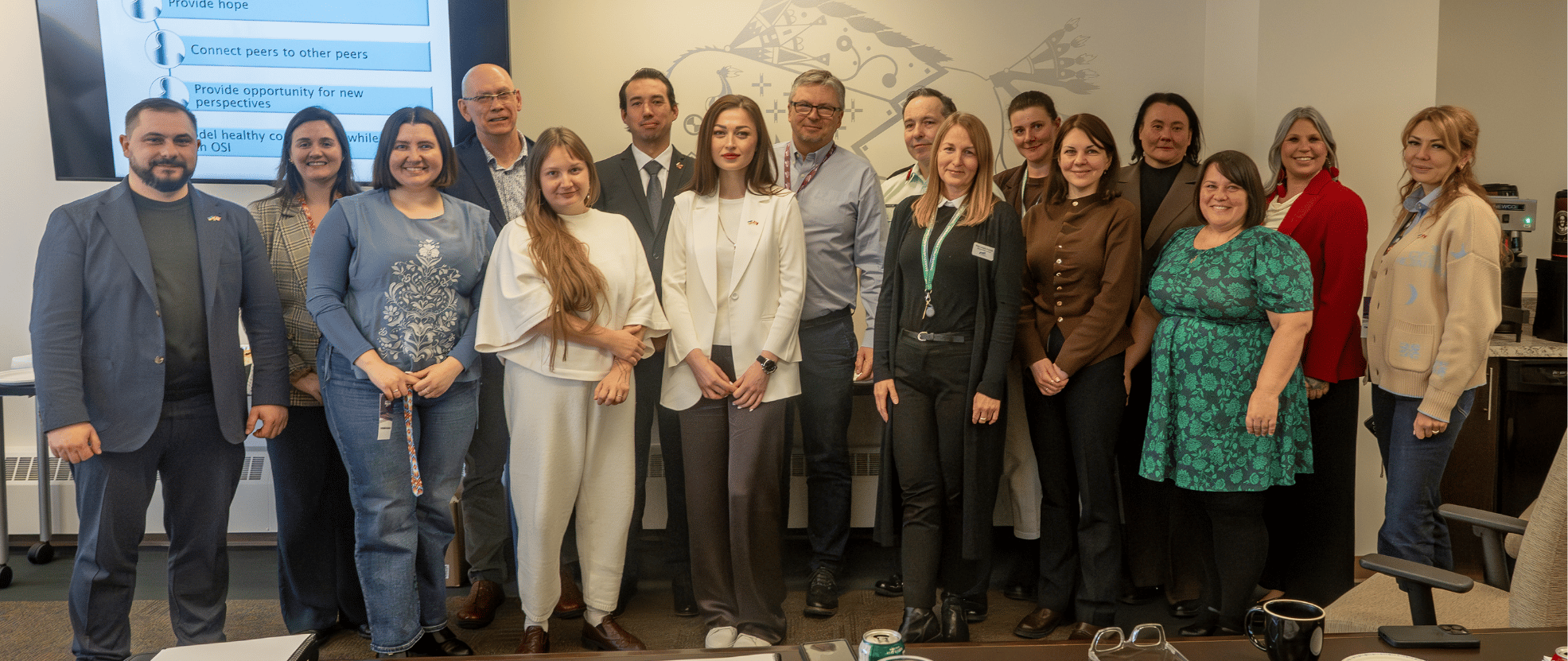
To help address these systemic challenges, Saskatchewan Polytechnic launched a $2‑million, five‑year project in 2025. As part of that effort, Sask Polytech is hosting a delegation from Ukraine this week, including Pryimak, through the Women Veteran Reintegration in Ukraine Project (WVRUP) funded by Global Affairs Canada.
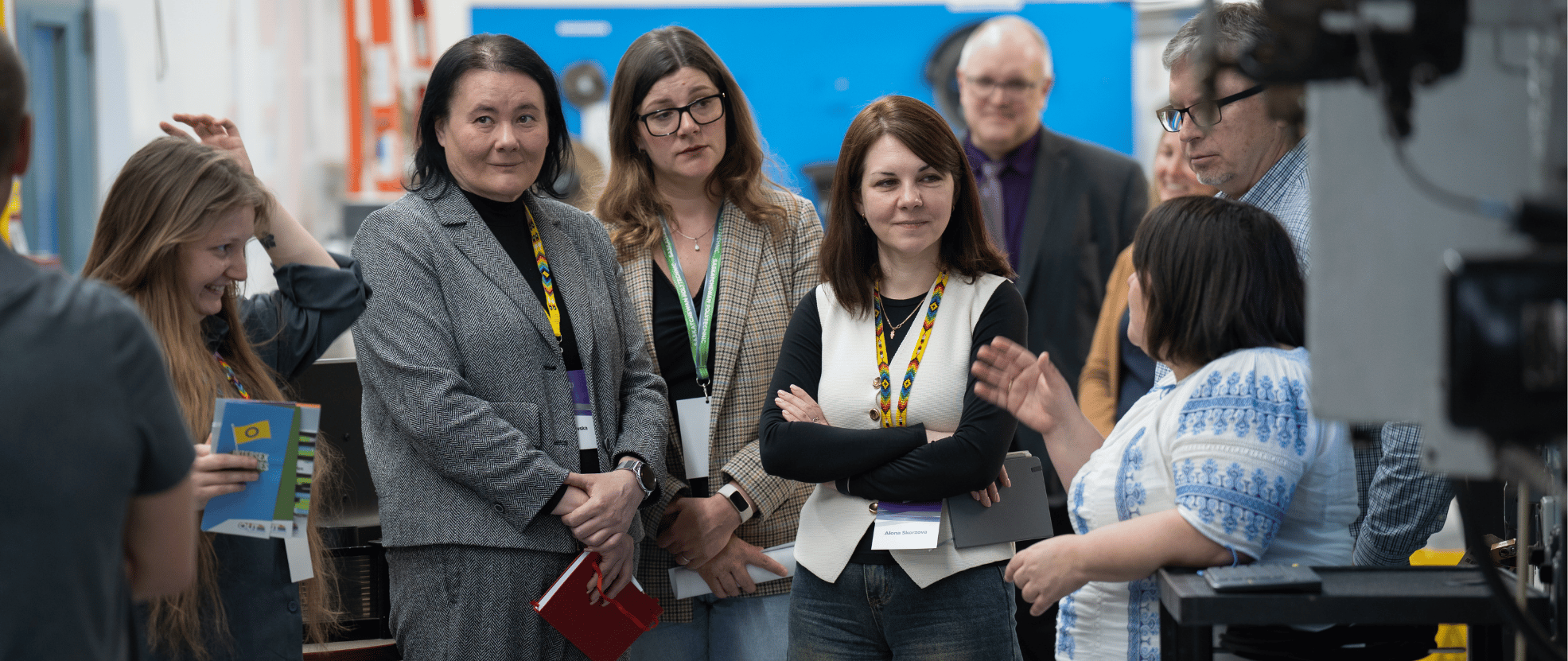
While in Saskatchewan, the delegation will take part in workshops at Sask Polytech focused on women veterans’ reintegration, skills training and recognition of military experience. Discussions will focus on developing educational resources, trainer handbooks and assessment tools that support skills development and entrepreneurship, as well as policy development aimed at strengthening dialogue and advocacy for Ukrainian women military veterans.
“There is a labour gap and women veterans can help fill that gap,” Pryimak says. “They are disciplined, resilient and motivated, but education is the key to unlocking that potential.”
WVRUP is delivered in partnership with the Women’s Information Consultative Center of Ukraine, Ministry of Veterans Affairs of Ukraine and State Economic Service of Ukraine. It supports women veterans through targeted employment programming, entrepreneurship training and psychosocial supports.
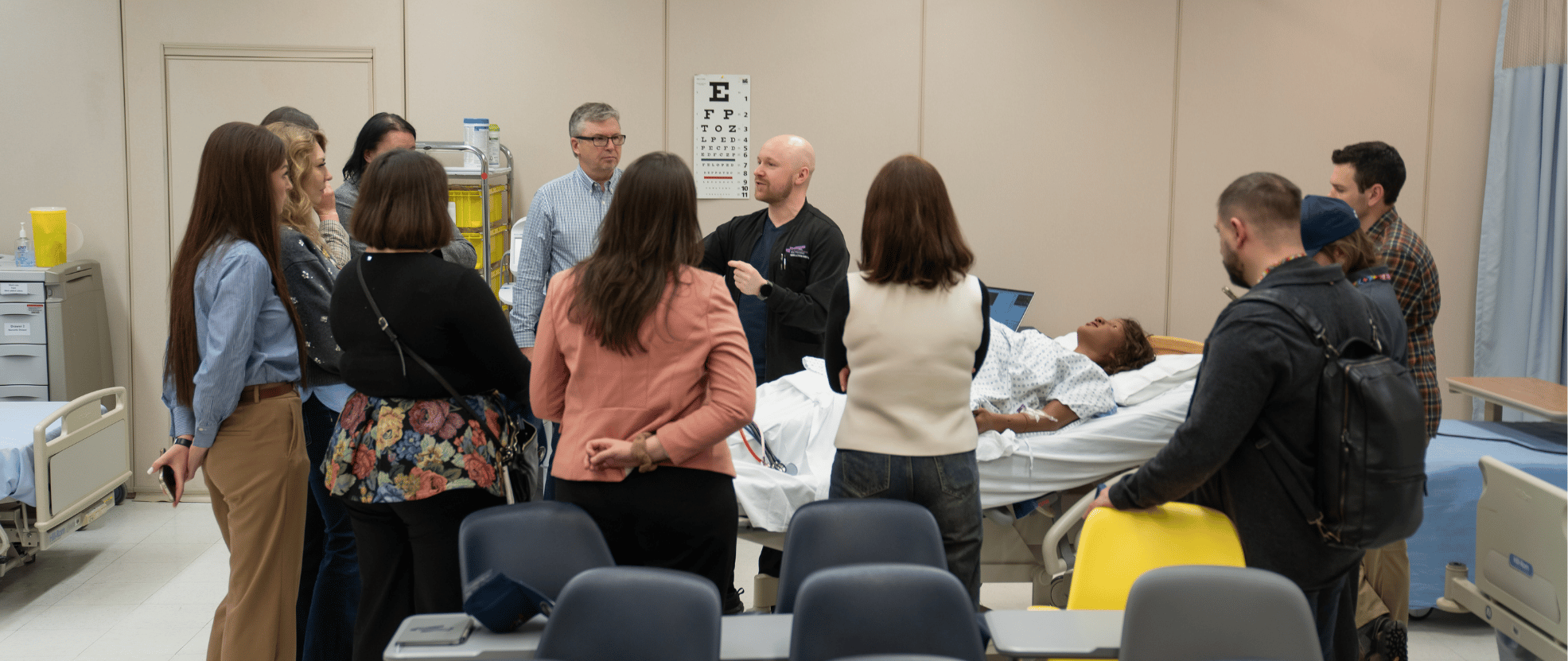
“Saskatchewan Polytechnic is honoured to work alongside the Government of Ukraine,” says Sask Polytech president and CEO Larry Rosia. “Hosting this delegation is both a continuation of that long-standing partnership and a reflection of our shared commitment to supporting women veterans as they transition to civilian life. This collaboration reflects the power of international partnership and knowledge exchange. I extend my sincere appreciation to our partners and project team for sharing their leadership, commitment and expertise to support Ukrainian veterans.”
Members of Ukraine’s Ministry of Veterans Affairs are part of the six-member delegation visiting Sask Polytech, and they are looking forward to learning more about creating clearer, vocational-focused educational pathways for veterans.
“Our three main goals are supporting veterans, providing education and helping those who want to start a business,” says Ivan Mukomel, deputy head of the Department for Veteran Education and Business at the Ministry of Veterans Affairs. The department provides grant support, professional training, certifications and education vouchers, allowing veterans to choose an institution and have their education funded through state contracts.
“When it comes to women veterans, we want to change the system so education leads more directly to employment,” Mukomel says. “That’s why we are very interested in Sask Polytech’s approach.”
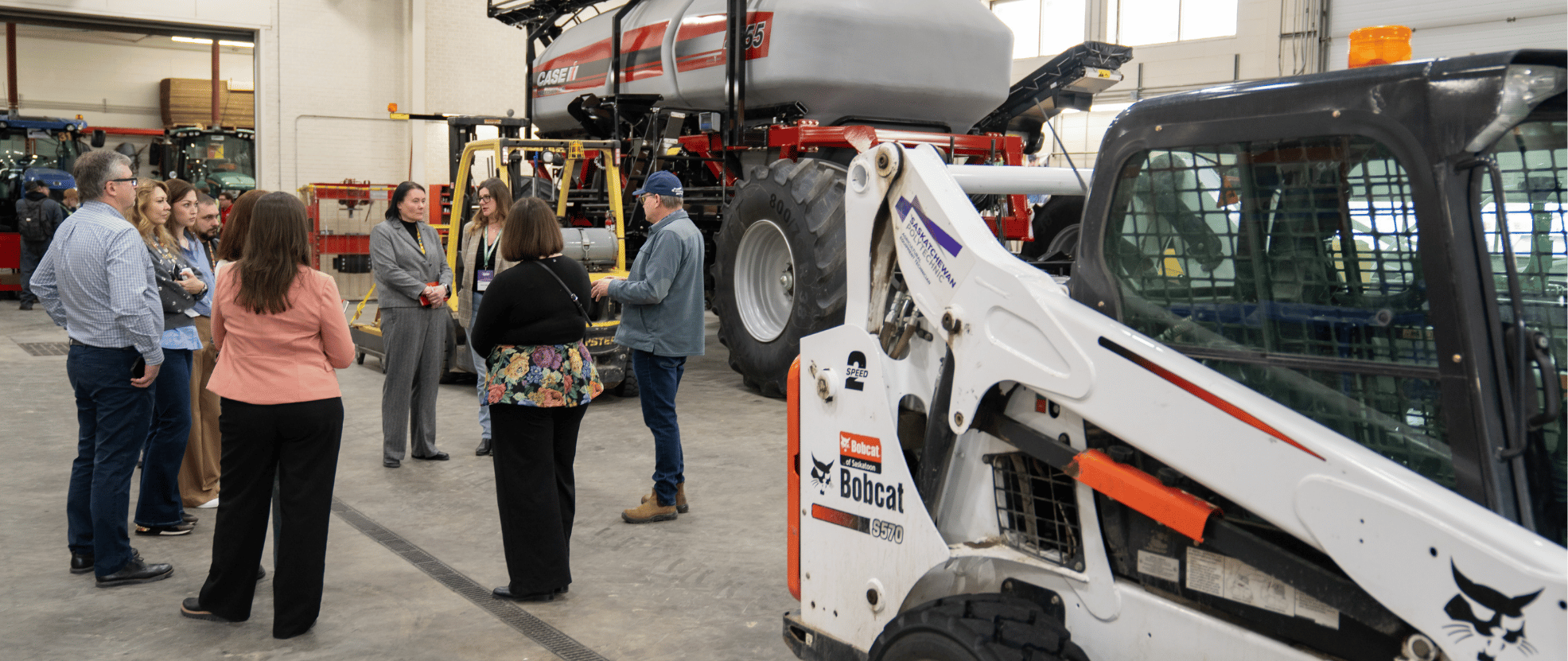
He points to the institution’s emphasis on practical, job-ready training and its ability to adapt programs for students with mental health challenges or physical disabilities though Accessibility Services.
“We are looking forward to learning how education can be adapted for students with physical disabilities,” he says. “Veterans are often injured during war. We want to understand what works and bring improvements back to our own system.”
Over the past decade, the number of women serving in the Armed Forces of Ukraine has increased fifteenfold and now exceeds 75,000. Many women veterans face significant challenges when returning to civilian life, including reduced income, limited employment opportunities and barriers to entrepreneurship.
For the State Employment Service of Ukraine, the stakes are urgent.
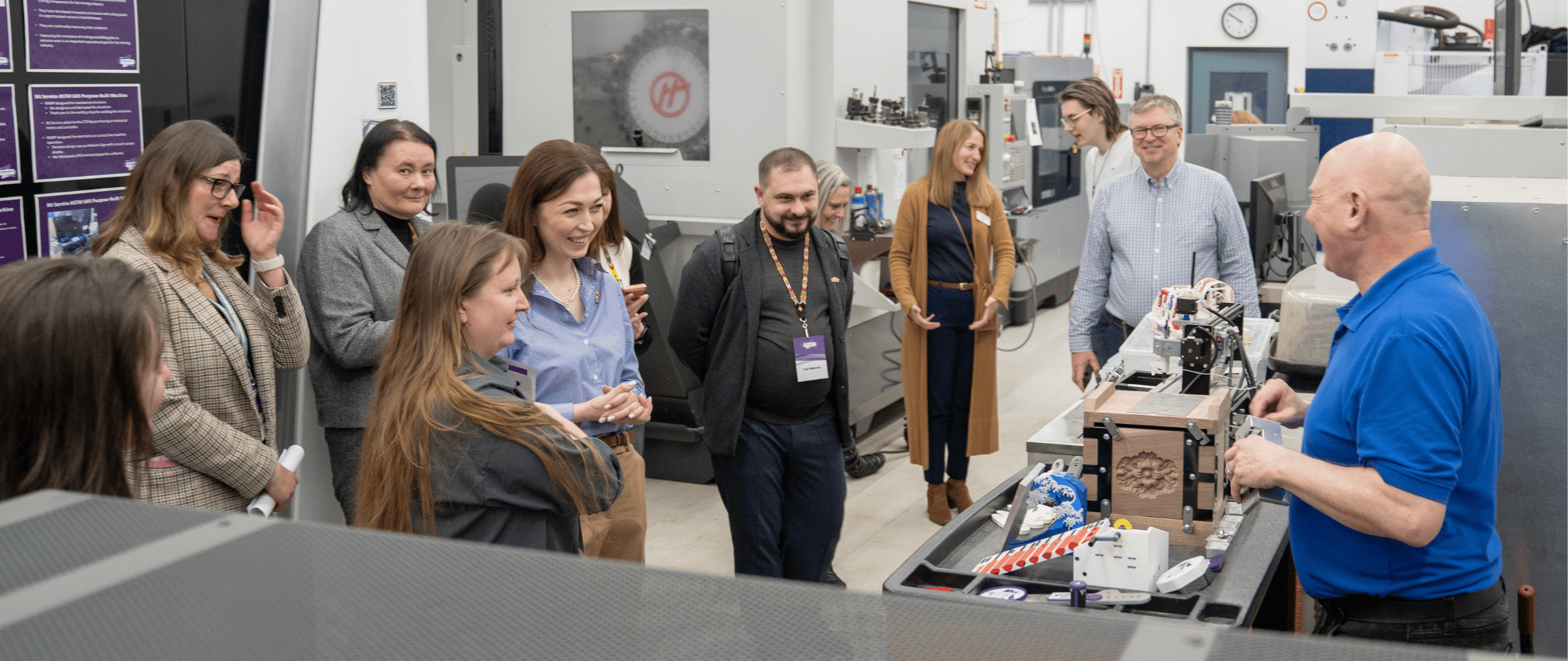
“We are facing serious challenges in the labour market,” says Alona Skorzova, deputy director of the Department for Employment Policy Implementation at the State Employment Service. “Many people went to war, and many were lost.”
To support veterans’ transition to civilian life, the State Employment Service focuses on four main tools: education and retraining, grants for starting a business, wage compensation for employers who hire veterans, and hands-on support with applications and program navigation.
“This is a very important moment for Ukraine,” Skorzova says. “Technical and vocational education will play the greatest role in helping veterans build civilian careers.”
She says Sask Polytech’s employer-driven model is particularly compelling.
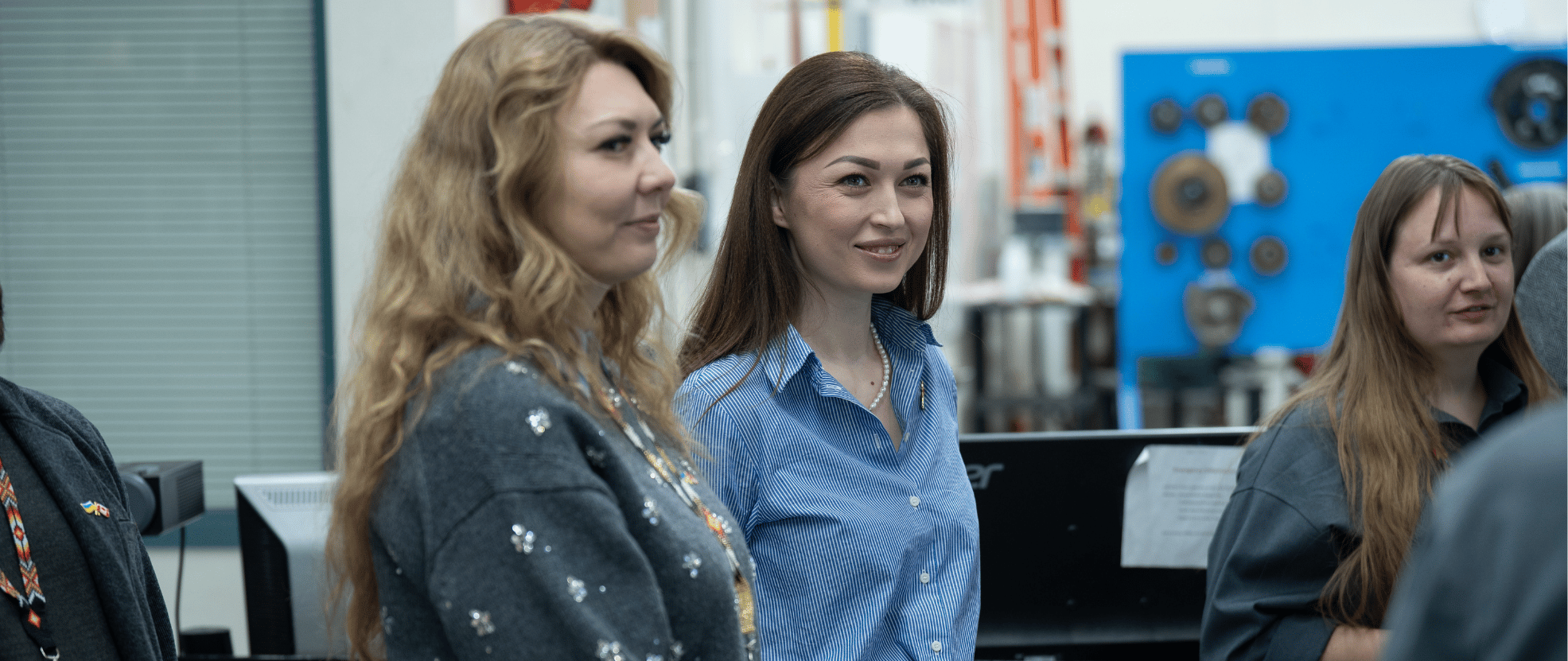
“Sask Polytech educates based on what companies actually need,” she says. “That alignment with employers is something we are very interested in learning more about this week and implementing in the future.”
Beyond employment, reintegration also involves rebuilding confidence and identity.
“Mental health, motivation and adapting to civilian life are major challenges,” says Olena Kolesnikova, project co-ordinator for the Reintegration of Women Veterans in Ukraine. “Some women entered military service before completing post-secondary education and don’t have prior civilian work experience.”
WVRUP focuses on regions with high concentrations of veterans, including Kyiv, Dnipro and Vinnytsia, and aims to improve the social and economic well-being of women veterans and their families. By 2028, the project is expected to reach 30,000 women veterans, benefit 6,000 family members, involve more than 60 master trainers and six new or improved training programs in high-demand sectors.
For more than 20 years, Sask Polytech has worked on international projects in Ukraine to strengthen skills training, workforce development and public-sector systems. By exchanging practical, evidence‑based models from Canada, WVRUP is helping co-create support systems that respond directly to the realities women veterans face, while establishing sustainable pathways to employment, entrepreneurship and community leadership.
For Pryimak, Canadian support carries deep meaning.
“This international project is important, but it’s not enough,” she says. “In Ukraine, conditions are very challenging right now. It’s hard to find solutions during war and poverty. There is still so much work to do.”
“It’s inspiring to see people in Canada stand with Ukraine and share their knowledge. It shows that even in very dark times, people are still trying to make the world a little better.”
Other members of the Ukrainian delegation include Yuliia Kirillova Deputy Minister for Veterans Affairs of Ukraine and Liliia Hrabovska, Deputy Director of the Department for Employment Policy Implementation. As part of the visit, Kirillova and Pryimak will share their personal experiences during a public discussion on women veteran reintegration in Ukraine. The event will take place Wednesday, April 29, at the Ukrainian Museum of Canada.

With more than 30 years of experience in international education, Sask Polytech is a leader in skills training aligned with local, regional and global labour market needs. With extensive experience in designing, delivering and managing international development projects, our involvement in national system reform initiatives in Ukraine, Jordan, and Vietnam—as well as local-level reforms in Ghana, Kenya, Malawi, Colombia, Yemen, Slovakia, and the Kyrgyz Republic—demonstrates both the quality of our services and the effectiveness of our project outcomes, particularly in technical and vocational education and training.
Learn more about Sask Polytech’s international development projects.
Saskatchewan Polytechnic is signatory to the SDG Accord. Sustainable Development Goal alignment is one of the ways Sask Polytech is leading
the rise of polytechnic education.