
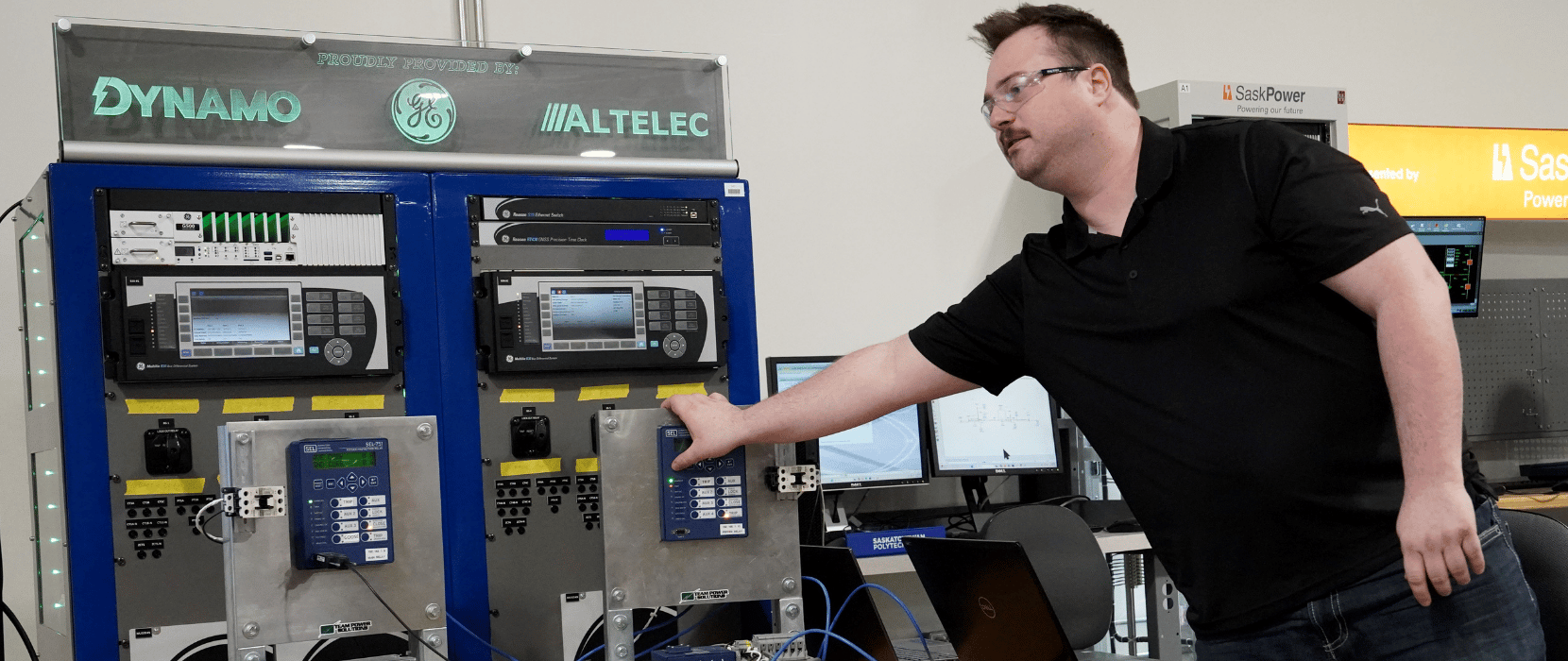
In the final term of Saskatchewan Polytechnic’s Electrical Engineering Technology (EET) program, students step beyond theory and into the complex, real-world challenges they will soon face on the job.
Capstone projects serve as the culmination of the program, students apply technical knowledge, problem-solving skills and professional judgment to real-world scenarios. This year, nine EET capstone projects explored topics ranging from power system protection and grid modernization to smart technologies and energy management, reflecting the evolving demands of the electrical industry.
“Capstone projects reflect the knowledge and skills students have developed in the program,” says Babith Varghese, program head for EET. “Students apply concepts in a way that mirrors what employers expect on the job.”
Designed to bridge lab work and workplace practice, the projects require students to combine technical knowledge with professional judgment. Teams must define a problem, research standards and technologies, develop and test solutions, and clearly document and present their work.
During their capstone students are required to collaborate effectively, manage timelines, document decisions and publicly present their findings. For many students, capstone projects also become portfolio pieces and conversation starters during job interviews.
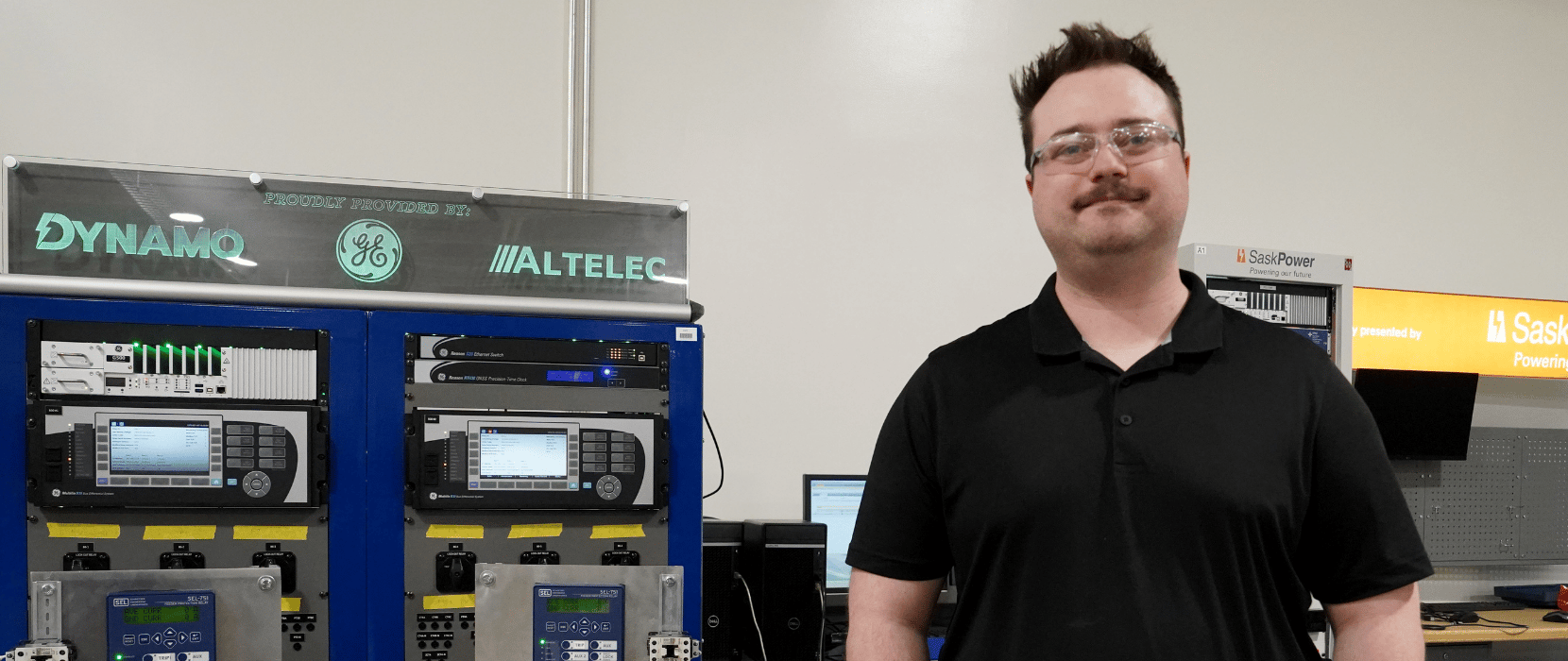
Jordan Hinrichsen says the blend of academic learning and paid co-operative education work terms drew him to the EET program. “I became interested in the EET program through my interest in electricity and recommendations from technologists.”
Hinrichsen worked with classmate Lyndon Fry on a capstone project that compared traditional hardwired substation connections with digital networking substation connections.
Fry said the idea grew out of his co-operative work-term experience, where he saw the standard being adopted for future substations.
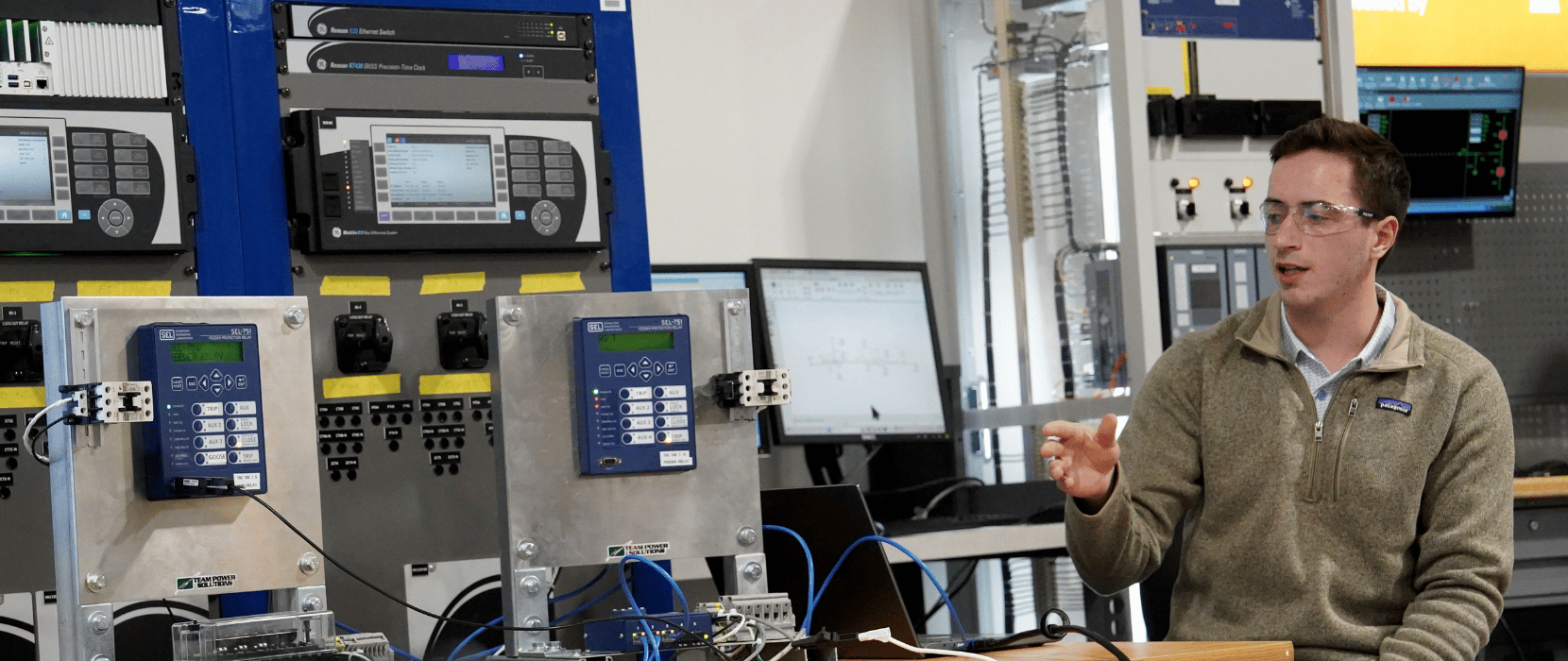
“One of the most interesting parts of the project was learning how to wire and program protective relays, including using the digital software to configure settings and test the relays,” says Hinrichsen.
“I wanted to gain more knowledge with the digital protocols that are becoming standard in industry,” says Fry. “Learning more about why International Electrotechnical Commission 61850 was introduced and how its digital communication protocols function is a big advantage for a future technologist.”
Like Hinrichsen, Fry says he enrolled in EET because, “friends and family who completed the program spoke highly of it, particularly the hands-on experience gained through co-operative work terms.”
Other projects addressed asset diagnostics and system reliability. Damiete Bob‑manuel focused on transformer testing, using advanced analysis methods to improve fault detection.
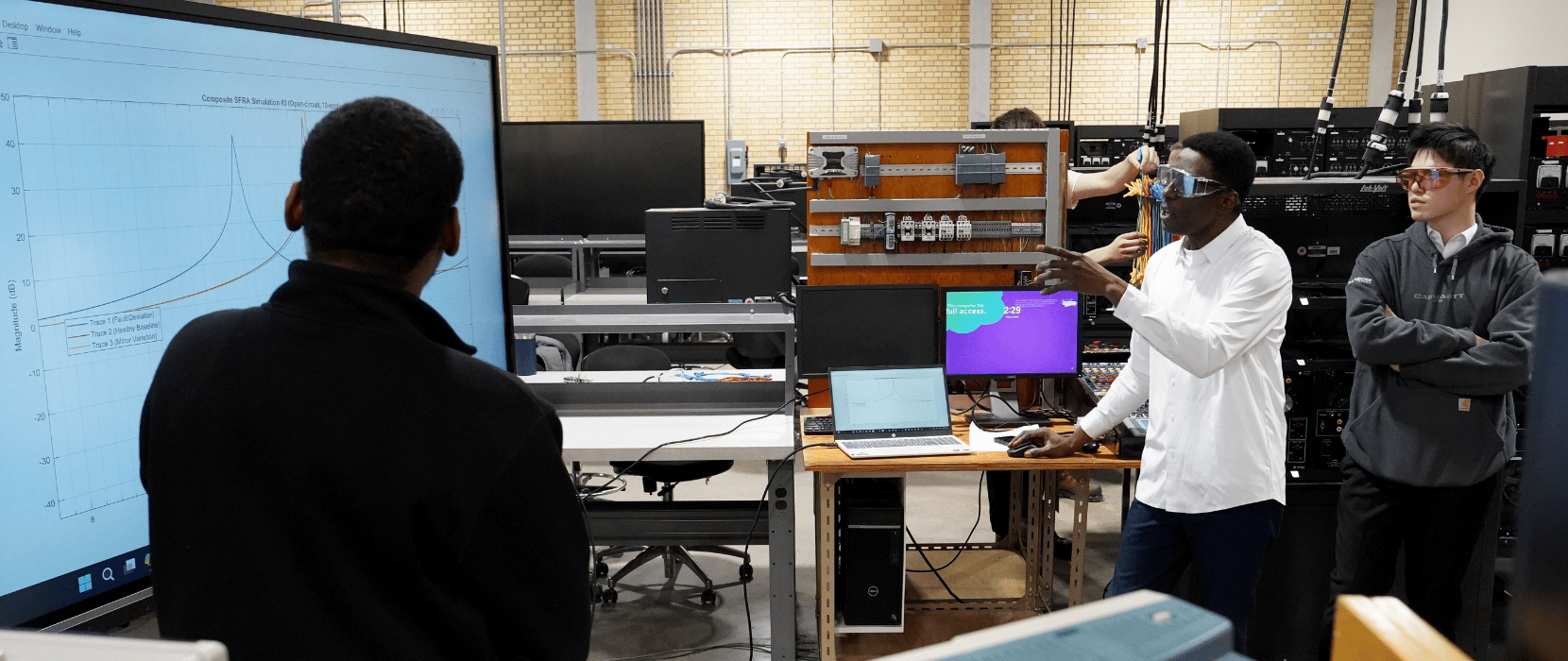
His project examined the use of sweep frequency response analysis to identify mechanical faults in power transformers. Bob‑manuel moved away from subjective visual testing toward a standardized, numerical framework aligned with 2024 Institute of Electrical and Electronics Engineers guidelines.
“While working with the system test team at SaskPower during my co-op work term, I noticed how much diagnostic interpretation relied on technician experience,” he says. “I wanted to research a way to make those results more objective and repeatable using mathematical modelling.”
Beyond technical expertise, Bob‑manuel says the capstone project sharpened his professional skills.
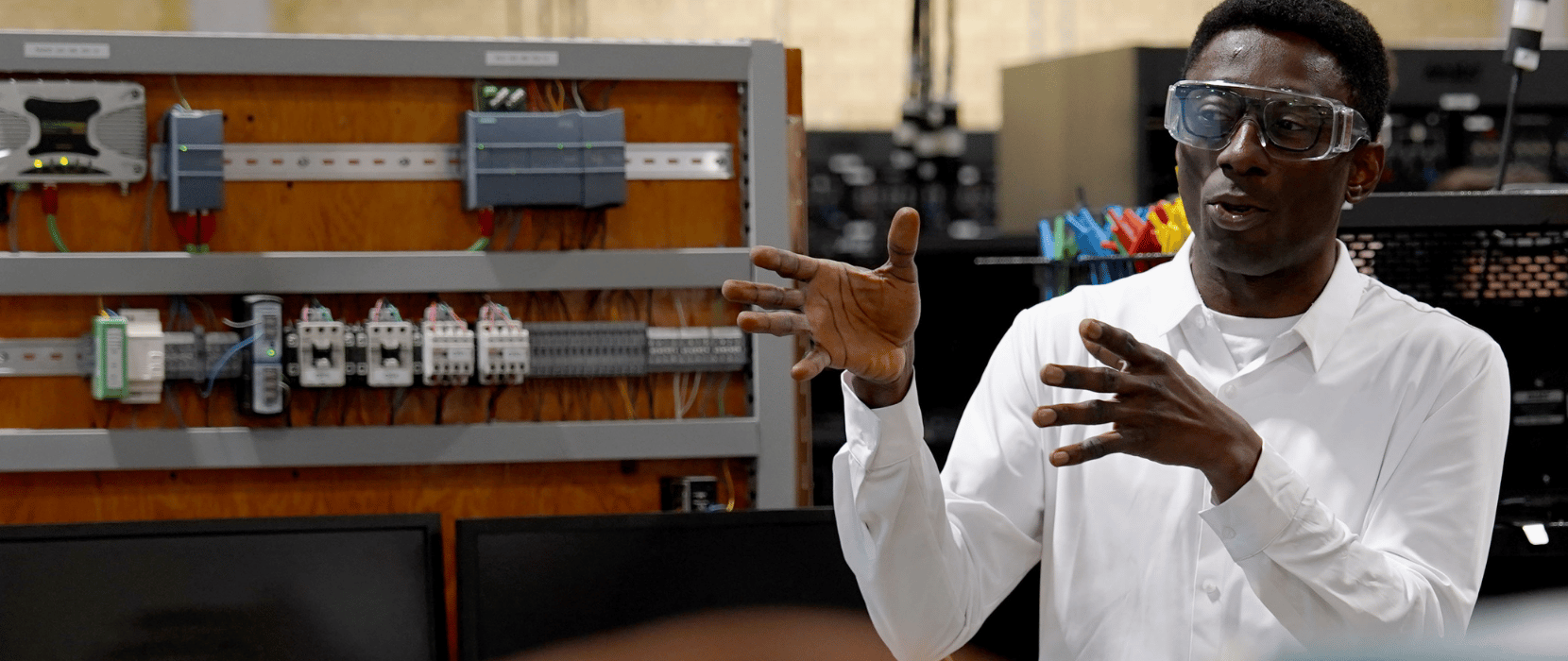
“I learned the value of perseverance when debugging complex simulations and the importance of professional technical report writing. Seeing the mathematical results finally align with real-world transformer behaviour was incredibly rewarding.”
Varghese said that development of employability skills is a core goal of capstone work. “These projects teach students how to think like technologists,” he says. “They learn how to explain complex ideas clearly and take ownership of their work.”
Bob‑manuel says, “I am most proud of the growth I achieved during EET by balancing intensive classroom sessions with real-world co-op experience. The collaborative environment and the high level of support from the instructors made my time here unforgettable.”
"I've had the pleasure of observing the students evolve from learners into emerging professionals though their capstone projects," says Mebrahtom Beraki, EET instructor. "Beyond applying technical concepts, their evolution in critical thinking, collaboration, resilience and professionalism has been impressive."
The program is accredited by Technology Accreditation Canada (TAC), and Technology Professionals Saskatchewan serves as the provincial regulatory body . Completion of this TAC‑accredited program, places graduates on an expedited pathway toward professional registration as either a professional technologist (P.Tech.) or a certified technician (C.Tech.).
Graduates may also be eligible for advanced standing or transfer credit toward engineering degrees. Opportunities include advanced standing in an engineering degree at Lakehead University, a block transfer into the Bachelor of Technology degree at Memorial University, or credit recognition toward Bachelor of Engineering Technology programs at Cape Breton University, including Manufacturing; Bio‑Medical, Electronics and Controls; and Petroleum.
Learn more about the Electrical Engineering Technology program.
