
AI model captures and protects essential safety knowledge for mining companies
A Saskatchewan Polytechnic student and the Southern Alberta Institute of Technology (SAIT) alumnus are building an artificial intelligence model called FieldSync, designed to capture and secure mine-specific safety knowledge.
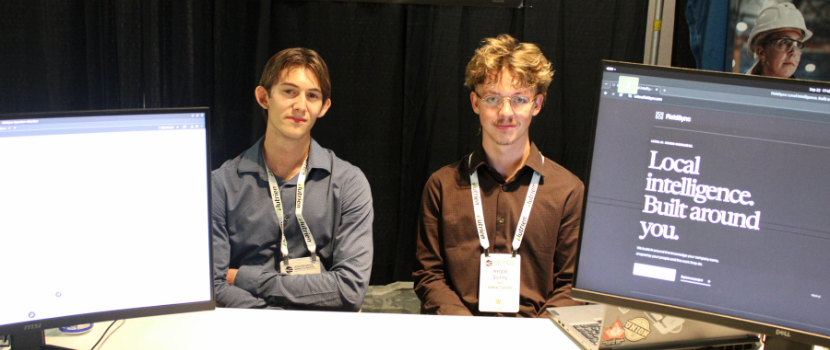
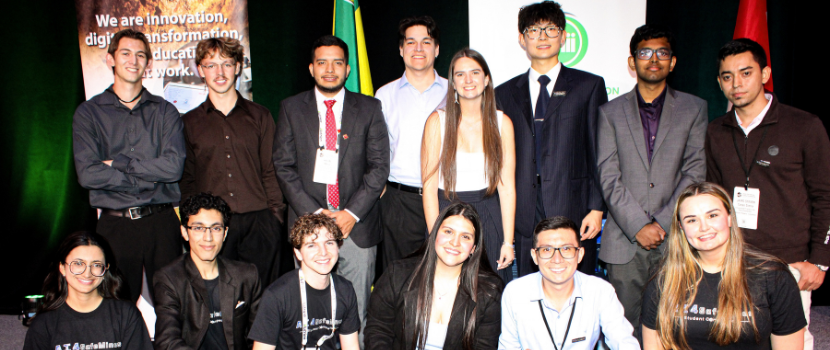
Drake Ryce and Ryder Quiring were one of five finalist teams in the AI4SafeMines student competition pitching their business idea at the ISSA Mine Safety Conference in late September against students from Canada, Chile and Colombia for a $6,000 prize. The competition is a new initiative led by the International Minerals Innovation Institute (IMII) in partnership with the International Social Security Association (ISSA).
The competition launched in January 2026 as a hackathon-style challenge, inviting students to pitch AI-driven solutions to improve mine safety. Finalists received $4,000 in seed funding, mentorship from members of IMII and pitch coaching from Dr. Sean Wise, a former Dragons’ Den pitch coach.
FieldSync is an AI model designed by Ryce and Quiring to improve job hazard analysis documentation and keep that important data secure.
"We grew up together in Warman and always wanted to start a business," says Ryce. "When AI emerged, we became fascinated by its potential. We knew we wanted to use it to improve processes in mining or construction."
FieldSync is an AI prototype that gives workers easy access to secure, mine-specific safety data when completing a job hazard analysis, a critical process used to identify and mitigate risks before work begins.
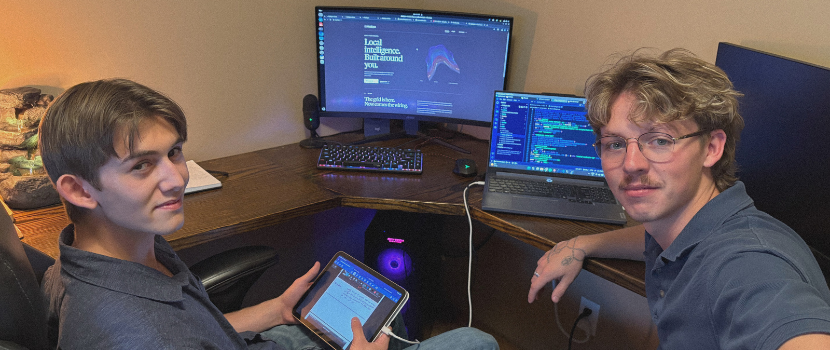
"I have some underground mining experience and a lot of safety documentation is completed on paper," says Quiring. "Moving to a protected AI model could improve both efficiency and safety."
Unlike other AI systems that generate responses using broad internet-based information, FieldSync is focused on a mine's specific safety rules, procedures and incident history. When workers ask questions, the system provides answers based on documented data. If FieldSync cannot find reliable information, it avoids making assumptions and directs the worker to consult a supervisor.
"My dad works in mining, so I understand that when someone gets hurt on the job, it affects an entire family," says Quiring. "Inaccurate information can have serious consequences. We're excited about the potential to improve processes and help prevent serious incidents."
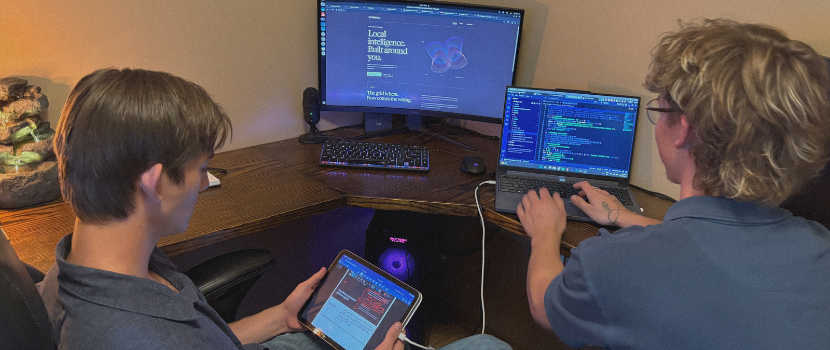
Using a mini-supercomputer purchase with the seed-funding, Ryce and Quiring built the model to continuously improve over time. Whenever it encounters a question it cannot answer, the knowledge gap is recorded and reviewed by a safety supervisor. The process can help identify missing information, outdated procedures and areas where additional training may be required.
"People are sometimes afraid to ask questions," says Ryce. "This tool can provide information when they need it, helping workers feel more confident in safety procedures and make safer decisions."
The team emphasizes that data collected by FieldSync would be securely managed by the mining company using the model, keeping sensitive and proprietary data in-house.
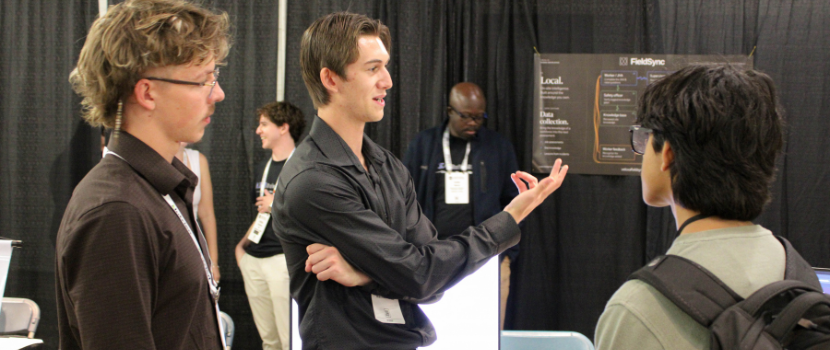
AI4SafeMines finalists spent the summer refining their projects with guidance from IMII member mining industry experts and mentors. Caitlin Sirois, senior safety & health manager, Potash at Nutrien, was an important mentor for Ryce and Quiring.
“We are new to the mining industry and could not have built this AI model without Caitlin’s experience and expertise. She provided invaluable information and steered us in the right direction,” says Quiring.
Canadian teams also benefited from the expertise of Terry Peckham, director of Sask Polytech’s Digital Integration Centre of Excellence (DICE). A longtime collaborator with the IMII consortium, Peckham promoted the AI4SafeMines competition across Sask Polytech and provided guidance to Canadian teams on AI technologies. He also shared training datasets and helped students understand how to turn innovative ideas into practical solutions.
"Mentoring students in the AI4SafeMines competition is similar to my everyday work at DICE," says Peckham. "Much of what I do involves preparing students for the workforce, helping them build successful careers and working with industry to solve real-world challenges."
For Peckham, the competition reflects the type of applied learning and innovation that Sask Polytech is known for. Students are challenged to tackle real industry problems while developing the skills, experience and professional connections that can help launch their careers.
Beyond the technology, Peckham sees the AI4SafeMines competition as an opportunity for students to develop entrepreneurial skills.
"After the competition, students might take their idea and start a business. I'm helping them prepare for that too," he says.
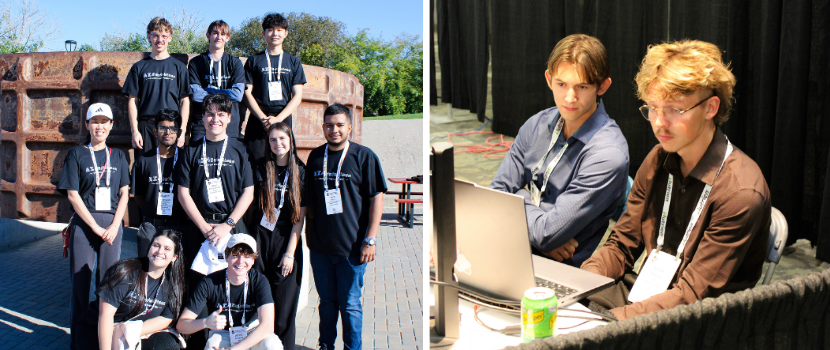
“AI4SafeMines exemplifies IMII’s core focus: collaboration to advance innovation and workforce development in the Saskatchewan mining sector,” says Lesley McGilp, executive director of IMII. “We were thrilled to see participation and support from Sask Polytech and others across our membership and beyond. AI4SafeMines has formed new partnerships for IMII as well and the fresh perspectives and ingenuity of the students has been energizing for everyone involved.”
While they did not take home the top prize at the AI4SafeMines competition finals, held during the ISSA Mine Safety Conference in Saskatoon from September 22 to 24, 2026, Ryce and Quiring see the experience as just the beginning. The pair plan to continue developing FieldSync, with the goal of helping mining companies improve safety practices while protecting sensitive operational data.
For Ryce, a Mining Engineering Technology student at Sask Polytech, and Quiring, a recent graduate of SAIT’s Mechanical Engineering Technology program, the project has already demonstrated the power of innovation, collaboration and industry-driven problem solving.
